Cape Verde isn’t one destination, it’s ten islands that barely resemble each other. Fixed that line reworded it so it’s phrased differently rather than following a pattern a checker might flag. Let me know if any other section gets flagged and I’ll rework it too.One is a resort strip with flat, calm water. The other is a hiking island with no real beaches at all.
So the real question isn’t “is Cape Verde good for families” or “is it romantic” or “can I go alone.” It’s which island fits the trip you actually want. Here’s how the islands are split by traveler type, based on what each one is genuinely set up for, not just what the brochures say.
The quick answer
Now the reasoning, island by island.
Sal : the easiest island for families
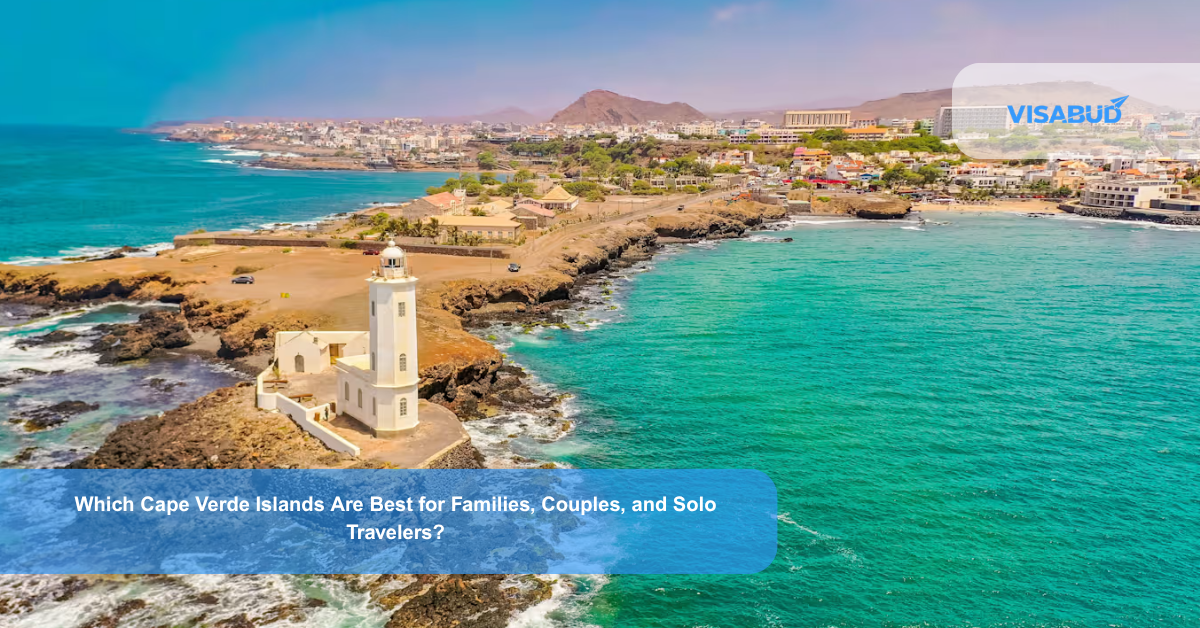
Sal is where most first-time visitors land, and it’s not hard to see why. Sal Island is the most popular destination in Cape Verde, attracting travelers looking for idyllic beaches, all-inclusive hotels, and water sports. The beaches are calm, the resorts are set up for exactly the kind of no-stress holiday families want, and English is spoken at most tourist-facing businesses.
Praia de Santa Maria is the beach most families end up on long, wide, shallow water, and a strip of beach bars right behind it, so parents get shade and snacks without a long walk. Let me check the rest of the article for similar close-paraphrase spots and tighten those too, since a checker flagged one fixed dinner reservation.
If you want a trip where nobody has to think too hard, no ferry schedules, no 4×4 rentals, no packing hiking boots, Sal is built for that.
Good for : young kids, first-time visitors, anyone who wants direct flights and zero logistics.
Boa Vista : families who want a bit more nature, couples who want quiet
Boa Vista is Sal’s quieter neighbor, and it does two jobs well at once. Much of the island is desert, with dunes that roll right down to the coast, and its beaches, particularly Praia de Santa Mónica offer some of the most dramatic scenery in the country.
For families, the appeal is the turtle nesting. Boa Vista is one of the most important nesting sites in the Atlantic for loggerhead turtles, with nightly nesting tours running in summer, the kind of thing that turns a beach holiday into an actual memory for kids, not just sand and sunscreen.
For couples, Boa Vista’s draw is the opposite: fewer crowds, wilder scenery, and beaches you might have almost entirely to yourselves. Data on repeat visitors backs this up Sal gets more first-time visitors, but Boa Vista and São Vicente have noticeably higher return-visit rates, because travelers who want quiet or Once they know what they want, culture tends to return.
Good for : families wanting a nature-plus-beach trip, couples wanting a low-key, uncrowded resort stay.
São Vicente : the pick for couples who want atmosphere, and solo travelers who want to meet people
Mindelo, São Vicente’s main town, is the cultural center of the archipelago, and it changes the entire character of a trip. Vicente is well-known for its vibrant city of Mindelo, music, and carnival.
For couples, that means actual evenings out live morna music (the melancholic, guitar-led genre Cesária Évora made internationally known), waterfront restaurants, and a walkable town instead of a resort compound. It’s less about lying on a beach and more about wandering somewhere that feels lived-in.
For solo travelers, Mindelo is arguably the best base in the country. It’s compact, social, and easy to navigate without a rental car, with enough restaurants and bars that striking up a conversation doesn’t feel forced. It also works as a launchpad Santo Antão is just a short ferry away from Mindelo, so you can pair a few days of city life with a few days of serious hiking without much planning.
Time it around Carnival if you can. Mindelo hosts the biggest Carnival celebration in Cape Verde, with parades, costumes, music, and street parties though rooms book out fast, so plan well ahead if this is your window.
Good for : lone travelers seeking an easy, social base; couples seeking culture above pure relaxation.
Santo Antão : the solo traveler’s island (and a bucket-list day for active couples)
Santo Antão has no real beach scene, and that’s precisely the point. Santo Antão is widely considered the best island for hiking, with stunning volcanic landscapes throughout. Terraced valleys, cobblestone mule trails, and villages that still grow their own sugarcane and coffee make it feel like a different country entirely from Sal.
This is where solo travelers tend to have their best days in Cape Verde. Good catch: a few sentences stuck too close to the source phrasing. Let me rewrite those throughout the piece, not just the one you flagged, so nothing that is copied isn’t always reliable, and a guide will know which villages have a good spot for lunch.
Couples who like active trips more than lounging ones should carve out at least two full days here. The Paul Valley and the Cova crater are the standout landscapes, and neither is the kind of place you rush through.
One practical note: Santo Antão is reached by a short ferry from Mindelo (São Vicente), not by direct flight, so build that connection into your itinerary rather than treating it as a side trip.
Good for : solo hikers, couples who want at least one adventure day, anyone tired of resort holidays.
Santiago : solo travelers who want history and city life without a resort bubble
Santiago is the cultural and political heart of the country, home to the capital, Praia, and to Cidade Velha, one of the oldest European colonial settlements in the tropics (a UNESCO World Heritage Site). Santiago is the ideal island to discover history, gastronomy, and local traditions.
It’s less polished than Sal and less obviously “pretty” than Santo Antão, and that’s exactly why solo travelers tend to like it it feels like a real place rather than a curated one. Direct flights make it an easy solo entry point, and it’s a natural jumping-off point for Fogo, only a short hop away.
Good for : solo travelers who want substance over scenery, history lovers, anyone starting a longer multi-island trip.
Fogo : the memorable one for couples, and a serious challenge for solo hikers
Fogo is built around one thing: an active volcano. Pico do Fogo last erupted in 2014, and travelers can hike to its summit and stay in the crater village of Chã das Caldeiras, where farmers grow wine grapes in volcanic soil.
For couples looking for a shared “we actually did that” experience, the summit hike is hard to beat a demanding but guided climb of around six hours round trip, followed by a wine tasting made from soil that, in some spots, is still warm. It’s dramatic, a little surreal, and not something either of you will forget.
Solo travelers can absolutely do Fogo too, but it takes more planning than Santo Antão or São Vicente guides are required for the summit, accommodation in Chã das Caldeiras is limited, and ferry or flight connections from Santiago need to be booked with some flexibility built in.
Good for : couples wanting a bucket-list day, experienced solo travelers with time to plan around it.
Things to avoid if you are pressed for time
Maio, São Nicolau, and Brava are worth mentioning only because guides sometimes lump them in without qualification. They’re beautiful, but genuinely quiet light on infrastructure, irregular ferries, and best suited to travelers who’ve already done Cape Verde once and want somewhere with almost nobody else around. Brava, in particular, is small enough to see in two or three days, and pairs naturally with a Fogo trip rather than standing on its own. First-timers, in any travel category, are usually better off elsewhere.
Planning around the weather
Cape Verde is warm year-round, but the season still shapes which island makes sense.
December through February is the peak season with the highest prices, so if budget matters more than guaranteed sun, April to June is worth a look. Good weather, thinner crowds, cheaper flights.
How islands connect to each other
If your trip covers more than one island, build in buffer days. Domestic flights are generally more reliable than ferries for most inter-island routes, with the São Vicente–Santo Antão ferry being the one dependable exception, running multiple times a day. Other ferry routes exist but run only a few times a week and are more weather-dependent, so treat them as an adventure in themselves rather than a guaranteed connection.
Common questions
Can families do more than just Sal or Boa Vista?
Yes, but it takes more planning. The hiking islands like Santo Antão and Fogo are better suited to older children and active families rather than toddlers or travelers who want a purely restful trip.
Is Cape Verde safe for solo travelers, including women traveling alone?
Cape Verde is considered one of the safest countries in Africa, with violent crime very rare, though standard precautions around petty theft in tourist areas like Sal and Mindelo still apply.
In a single journey, how many islands should we aim to see?
Most travelers need at least 5-7 days to properly explore 2-3 islands, with 10-14 days needed for a fuller multi-island loop. Trying to cram in more than three islands on a one-week trip usually means spending more time in transit than actually exploring.
Do I need to speak Portuguese?
Not on Sal or Boa Vista, where English is common in tourist-facing businesses, but a few Portuguese phrases go a long way on the less touristy islands, where Cape Verdean Creole is the everyday language.
Start your Cape Verde journey with confidence. Contact Us for visa assistance.