TL;DR
First-time visitors to the Faroe Islands should start in Tórshavn, the compact capital with turf-roofed old-town houses, before heading out to the islands’ natural highlights. Must-sees include the “floating” Lake Sørvágsvatn, Múlafossur waterfall in Gásadalur, the Vestmanna Bird Cliffs, and puffin-spotting on Mykines (May–August). Quieter stops like Saksun, Bøur, and Tjørnuvík offer postcard views without long hikes, while the underwater sea tunnels are worth experiencing in their own right. Round out the trip with local Faroese food, and optional whale-watching or kayaking tours. Pack for fast-changing weather, budget extra driving time for tunnels and mountain roads, and expect small access fees at some trails. Four to six days is enough to hit the highlights longer if you want buffer time for weather.
If you’re planning your first visit to the Faroe Islands, you’re probably staring at photos of green cliffs dropping into the North Atlantic and wondering where to even begin. This small archipelago between Iceland and Norway packs an enormous amount of scenery, culture, and quiet adventure into just 18 islands. There’s no need to rush – even a short trip can leave you with memories that last far longer than the flight home.
Here’s a practical, first-timer-friendly guide to the experiences worth building your itinerary around.
Start in Tórshavn, the World’s Smallest Capital
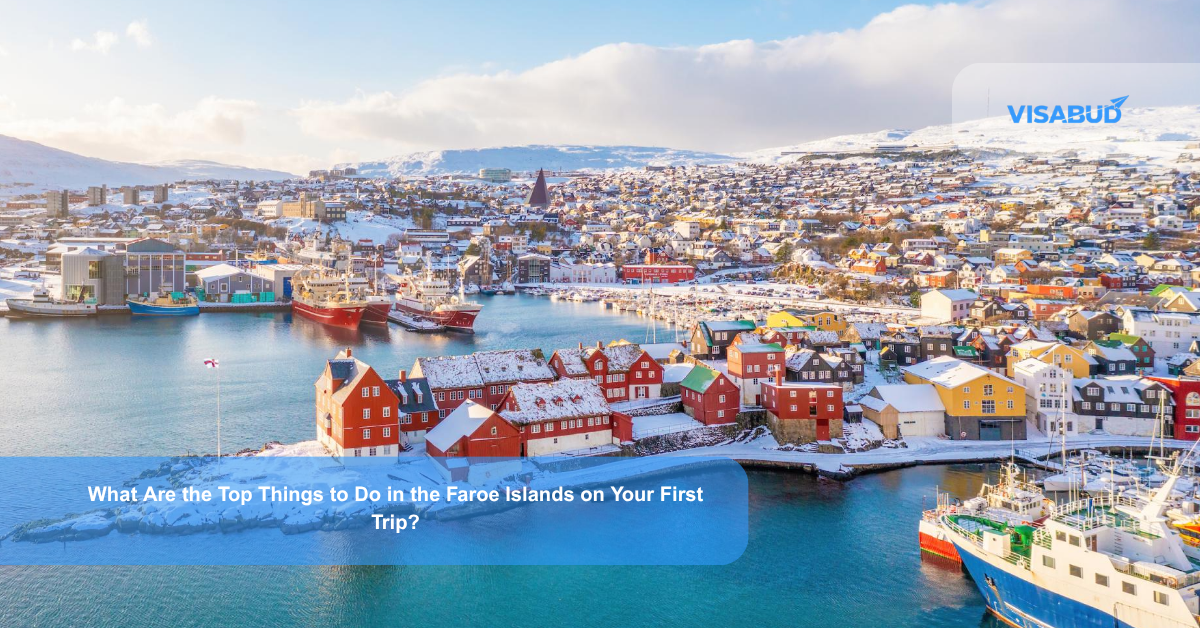
Most trips begin in Tórshavn, and it’s worth spending your first day here before heading out to the more remote villages. With a population of around 13,000, it might be the smallest capital city you ever visit, but it doesn’t feel empty. The old town, Tinganes, is home to turf-roofed wooden houses that double as government buildings – a strange and charming mix of history and daily bureaucracy happening side by side.
Walk along the harbor, grab a coffee at one of the small cafés, and get a feel for local life before you head into the wilder parts of the islands. Tórshavn is also a good place to pick up local wool sweaters, handmade crafts, and a proper Faroese meal before your road trip begins.
Hike to Lake Sørvágsvatn (Leitisvatn)
This is one of the most photographed spots in the Faroe Islands, and for good reason. Lake Sørvágsvatn sits above the ocean, and thanks to an optical illusion created by the cliffs, it looks like the lake is floating hundreds of meters above the sea. The hike to the viewpoint takes about two to three hours round trip and doesn’t require technical climbing skills – just sturdy shoes and reasonably good weather.
Go early if you can. The light in the morning tends to be softer, and you’ll likely have the trail mostly to yourself before the day-trippers arrive.
Visit Múlafossur Waterfall in Gásadalur
Gásadalur was once one of the most isolated villages in the country, only reachable by boat or a steep mountain path until a tunnel was built in 2004. Today it’s an easy drive, but the isolation still shows in the scenery. Múlafossur waterfall drops straight into the ocean here, framed by the village’s few houses and grazing sheep. It’s a short walk from the parking area, making it one of the easiest “wow” moments on the islands to reach.
Take a Boat Trip to Vestmanna Bird Cliffs or Mykines
If cliffs and seabirds are on your list, plan a boat tour to the Vestmanna Bird Cliffs. These towering sea cliffs are home to thousands of nesting birds, and the boat gets close enough that you can hear the noise and feel the spray without ever setting foot on land.
For a more hands-on experience, take the ferry to Mykines, the westernmost island and one of the best places in Europe to see puffins up close during the summer months (roughly May to August). The hike out to the lighthouse at the island’s tip is steep in places but manageable, and the puffin colonies along the way make every uphill step worth it.
Explore the Village of Saksun
Saksun feels like it was built for postcards. Tucked into a valley with a tidal lagoon and surrounded by steep green hills, this tiny settlement has a turf-roofed church and just a handful of houses. It’s a quiet, contemplative kind of beautiful rather than dramatic, and it’s a good stop if you want a slower pace between hikes.
Drive the Sea Tunnels (and Look Up)
Getting around the Faroe Islands is an experience of its own. Several islands are connected by underwater tunnels, including the Eysturoyartunnilin, which features a roundabout decorated with colorful lights and artwork deep beneath the ocean. It sounds like a small thing, but driving through it – especially at night – is genuinely memorable and a good reminder of how much engineering goes into keeping these remote communities connected.
Try Local Faroese Food
Faroese cuisine leans heavily on what the sea and the land provide: fish, lamb, and root vegetables, often prepared using traditional drying and fermenting methods that date back centuries. In Tórshavn, a few restaurants offer tasting menus that introduce newcomers to dishes like dried fish, seafood soup, and slow-cooked lamb. If you’re curious but cautious, start with a tasting menu rather than ordering blind – it gives you small portions of several dishes so you can figure out what you like.
Watch the Villages of Bøur and Tjørnuvík
Two more villages worth adding to your list are Bøur, with views out toward the dramatic sea stacks of Tindhólmur and Drangarnir, and Tjørnuvík, a small settlement facing the twin The sea stacks of Risin og Kellingin (the Giant and the Witch). Both are short drives from Tórshavn or Vágar and offer some of the best photo opportunities on the islands without requiring a long hike.
Go Whale Watching or Kayaking
Depending on the season, boat tours around the islands sometimes include sightings of pilot whales, dolphins, and seabirds. Kayaking tours are also available around Tórshavn and a few coastal villages, giving you a different perspective on the cliffs and sea stacks than you’d get from land. These tours are usually weather-dependent, so it helps to build a buffer day or two into your itinerary in case conditions shift.
A Few Practical Notes for First-Timers
Weather in the Faroe Islands changes quickly, sometimes within the same hour, so pack layers and waterproof gear no matter the season. Roads are well maintained, but some routes involve single-lane tunnels and winding mountain passes, so give yourself extra time when driving between villages. Many of the best hikes and viewpoints, including Sørvágsvatn and parts of Mykines, require a small access fee that supports the local landowners and trail maintenance – it’s a system worth respecting rather than avoiding.
Most visitors find that four to six days is enough to cover the highlights without feeling rushed, though a longer stay gives you more room for weather delays and quieter exploring.
Final Thoughts
The Faroe Islands aren’t a destination you rush through with a checklist. The real appeal is in the pace – long drives through fog and sudden sunlight, villages that seem to appear out of nowhere, and landscapes that shift dramatically within a few kilometers. Whether your first trip includes every stop on this list or just a handful, you’ll likely leave already planning your next visit.
Are you preparing to visit the Faroe Islands for the first time? Contact Us for travel tips and help.