TL;DR :
Argentina is now a lot more doable for Indian travellers. If you hold a valid U.S. visa or Green Card, you can enter visa-free for up to 90 days (Resolution 353/2025); without one, the Argentine consulate in Mumbai issues a free tourist visa, just apply early. Flights from India run ₹90,000–₹1,50,000 round-trip via hubs like Doha, Dubai, or Istanbul book 3-4 months out. Argentina’s old blue-dollar exchange maze has mostly disappeared since 2025, so cards and cash both work fine now. Save money by staying in hostels/guesthouses (San Telmo, Palermo), eating your main meal at lunch via “menu del día,” and taking overnight buses instead of flights between cities. A realistic two-week mid-range trip runs roughly ₹2,00,000–₹3,00,000 per person, less if you travel in a group and skip Patagonia splurges.
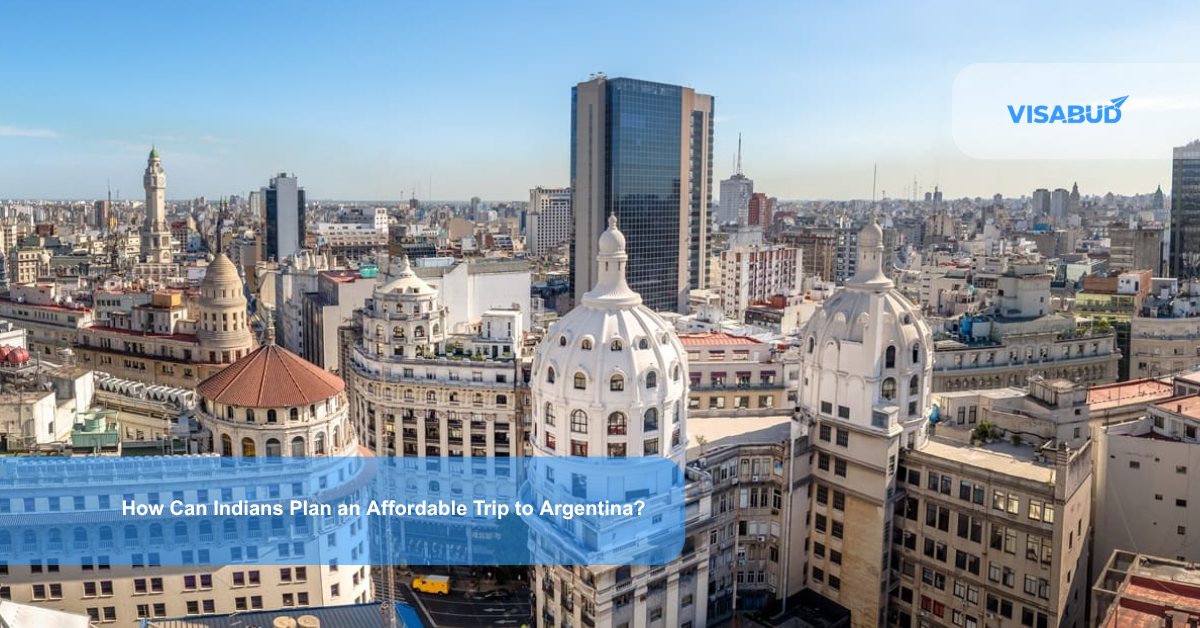
Argentina has always sounded like a faraway dream for most Indian travellers: tango in Buenos Aires, glaciers in Patagonia, the thunder of Iguazu Falls, and the pampas stretching out under an endless sky. For years, the biggest obstacles were the visa paperwork and the long flight. Both of those hurdles have gotten smaller recently, and the currency situation that once made trip-planning so confusing has settled down too. If you plan carefully, a trip to Argentina is more realistic than most people assume.
This guide walks through what an Indian traveller actually needs to know right now: visas, flights, money, stays, food, and a realistic budget so you can plan a trip that doesn’t drain your savings.
Visa Rules for Indians Travelling to Argentina
This is the part that has changed the most, so it’s worth getting right.
Since August 2025, Argentina has made entry considerably easier for Indian passport holders through Resolution 353/2025. If you hold a valid U.S. visa (tourist B1/B2, or certain other categories like J, O, P, E, or H-1B) or a U.S. Green Card, you can enter Argentina for tourism without applying for a separate Argentine visa or an electronic travel authorization. This gets you a stay of up to 90 days, and you don’t need to have ever actually used that U.S. visa simply holding a valid one is enough.
If you don’t hold a U.S. visa, you’ll still need to apply for a traditional Argentine tourist visa through the Argentine Consulate in Mumbai. The good news here is that this visa is issued free of cost for Indian applicants, though you’ll need to submit the usual documents: passport, photographs, proof of travel and accommodation, bank statements, and an itinerary. Processing can take a few weeks, so it’s worth applying well ahead of your travel dates rather than leaving it for the last minute.
Either way, always double-check the latest requirements on the Argentine Embassy’s website before booking flights, since immigration rules can be updated with little notice.
Best Time to Visit for Value and Weather
Argentina sits in the Southern Hemisphere, so its seasons run opposite to India’s. Summer runs from December to February, and winter from June to August. For most travellers, the shoulder seasons March to May and September to November offer the best mix of pleasant weather and lower prices, since accommodation and flights tend to be cheaper outside the December-January peak tourist rush.
If Patagonia and its glaciers are on your list, plan for the Argentine summer months, since many trails and boat excursions in the south shut down or become harder to access in winter. Buenos Aires, on the other hand, is comfortable to explore for most of the year.
Getting There : Flights from India
There are no direct flights between India and Argentina, so every route involves at least one, and usually two, stopovers. Common connections run through Doha, Dubai, Istanbul, São Paulo, or Madrid, with airlines like Qatar Airways, Turkish Airlines, Emirates, and LATAM regularly used on this route.
Round-trip fares from major Indian cities typically fall somewhere between ₹90,000 and ₹1,50,000 in economy class, depending on the season, how far in advance you book, and which city you’re flying to in Argentina. A few things that genuinely help bring the fare down :
Understanding Argentina’s Currency Situation
Argentina’s currency, the Argentine peso, has a reputation for chronic inflation, and for years travellers had to navigate a maze of exchange rates, the official rate, the informal “blue dollar” rate, and the MEP rate, all of which could differ wildly from one another. That confusion has largely settled down. Since currency controls were lifted in 2025, the official, blue, and MEP rates have converged, and by mid-2026 the gap between them sits at only a few percentage points. In practical terms, this means you no longer need to hunt for informal exchange houses or carry stacks of crisp dollar bills to get a fair rate.
That said, a few habits still help :
Where to Stay Without Overspending
Accommodation is one of the easiest places to control costs. Buenos Aires has a strong hostel and guesthouse culture, and neighbourhoods like San Telmo, Palermo, and Recoleta all offer budget to mid-range options within walking distance of major attractions. A bed in a decent hostel dorm can cost as little as $10 to $15 a night, while a private room in a budget guesthouse usually falls between $25 and $45.
Outside the capital, in places like Mendoza, Bariloche, or El Calafate, prices rise a bit because these are more tourist-dependent towns, but booking a few weeks ahead and avoiding the peak December-January window keeps things manageable. Apartment rentals are also worth considering if you’re travelling with a group, since splitting the cost of a self-catered place often works out cheaper than multiple hotel rooms and lets you cook some of your own meals, which helps the food budget too.
Eating Well Without Spending a Lot
Argentina is a genuinely great country for food lovers, and much of what makes it famous is also affordable if you eat the way locals do. A “menu del día” (fixed lunch menu) at a neighbourhood restaurant can cost a fraction of what a similar dinner would, and it’s a great way to try Argentine staples like empanadas, milanesas, and, of course, steak, without paying tourist-area prices.
Some ways to keep food costs down :
Getting Around the Country
Long-distance buses are the backbone of budget travel in Argentina, and the network is genuinely excellent by international standards. Overnight buses between cities like Buenos Aires, Mendoza, and Bariloche often come with reclining “cama” seats, which double as transport and accommodation for a night, saving you a hotel booking in the process.
For longer distances, say, from Buenos Aires down to Patagonia domestic flights can actually work out better once you weigh in the time saved, especially if you book early with airlines like Aerolíneas Argentas or JetSMART. Within cities, the Buenos Aires subte (metro) and local buses are inexpensive and easy to use once you get a rechargeable SUBE card, which is required for public transport payments.
A Realistic Budget for a Two-Week Trip
Costs vary depending on your travel style, but as a rough guide, a mid-range two-week trip covering Buenos Aires and one or two other regions factoring in flights, stays, food, local transport, and a few paid excursions tends to fall somewhere between ₹2,00,000 and ₹3,00,000 per person. Travelling in a small group, sticking to hostels and guesthouses, eating like a local, and relying on buses over flights can bring this down meaningfully. On the other end, adding Patagonia excursions, private tours, or higher-end stays can push the number well past that range, so it helps to decide early which experiences matter most to you and budget accordingly.
A Few More Ways to Save
Final Thoughts
Argentina is no longer the impossibly complicated destination it once seemed for Indian travellers. The visa process has become far more accessible for those holding a U.S. visa, and even the traditional visa route is free of charge. The currency confusion that scared off a lot of past travellers has largely sorted itself out too. What’s left is mostly ordinary trip planning, booking flights early, choosing budget-friendly stays, eating where locals eat, and using buses to cover ground. With a bit of preparation, watching Iguazu Falls up close or the sun set over the Andes from Mendoza is well within reach.
Contact Us for Help Planning Your Argentina Trip