TL;DR :
Gabon stands apart from mainstream African safari destinations like Kenya or South Africa because it’s covered in dense Congo Basin rainforest rather than savanna, offering a slower, jungle-based style of wildlife exploration. Its biggest draw is Loango National Park, where forest elephants and hippos are famously found on the beach alongside offshore whales, a coastal-forest overlap found nowhere else in Africa. The country’s wildlife focus is on primates (gorillas, mandrills, chimpanzees) rather than the Big Five, and its conservation-first tourism model, low visitor numbers, French colonial heritage, and remote waterfalls/rivers add further contrast. Politically stable but infrastructure-light, Gabon suits travelers seeking genuine, uncrowded wilderness over a conventional safari checklist.
When most travelers think of an African safari, a handful of familiar names come to mind Kenya, Tanzania, South Africa, Botswana. These countries have built world-famous tourism industries around their savannas, their Big Five sightings, and their well-trodden safari circuits. But tucked away on the west coast of Central Africa is a country that offers something entirely different: Gabon.
Gabon rarely appears on mainstream travel bucket lists, and that is precisely what makes it so remarkable. While other African nations have spent decades developing mass tourism infrastructure, Gabon has quietly protected its wilderness, keeping visitor numbers low and ecosystems intact. The result is a country often nicknamed “Africa’s Last Eden” a place where forest elephants walk on ocean beaches, hippos surf in the Atlantic waves, and gorillas move through some of the last untouched rainforest on the continent.
So what exactly sets Gabon apart from the rest of Africa’s travel destinations? Let’s explore the features that make this small, oil-rich Central African nation one of the most distinctive places on the continent to visit.
1. Rainforest Instead of Savanna
The single biggest difference between Gabon and classic safari destinations is the landscape itself. Countries like Kenya and Tanzania are defined by open grasslands and rolling savanna, the backdrop for the iconic jeep-and-binoculars safari experience. Gabon flips that image entirely.
Roughly 80 to 85 percent of Gabon is covered in dense equatorial rainforest, making it part of the Congo Basin the second-largest rainforest system on Earth after the Amazon. Instead of scanning open plains for lions, visitors here navigate through thick, humid jungle, cross rivers by boat, and track wildlife on foot through dense vegetation. It’s a slower, more immersive, and arguably more adventurous style of exploration than the classic game drive.
This rainforest-first identity means Gabon attracts a different kind of traveler altogether, one who is drawn to biodiversity, remoteness, and ecological richness rather than the wide-open, photogenic plains that dominate typical safari marketing.
2. Elephants and Hippos on the Beach
Perhaps the single most famous and strangest image associated with Gabon is that of wild animals on the beach. Nowhere else in Africa can you reliably see forest elephants strolling along white sand or hippos wading and even “surfing” in the Atlantic surf. This phenomenon is centered around Loango National Park, often described as the crown jewel of Gabon’s protected areas.
Loango is unusual because its rainforest runs directly into the ocean, creating a rare overlap of ecosystems in a single, unbroken stretch. Wildlife here isn’t confined to a savanna reserve; it moves freely between jungle, lagoon, and coastline. Visitors might spot a forest elephant grazing near the tideline in the morning and watch humpback whales breaching offshore in the same afternoon, particularly between July and October when whale migration passes along the Gabonese coast.
This blending of coastal and forest ecosystems in one place is something you simply won’t find in the classic safari countries, where wildlife-watching and beach relaxation are usually separate trips altogether.
3. Gorillas, Mandrills, and Rare Primates
While East and Southern Africa are famous for lions, leopards, and the rest of the Big Five, Gabon’s wildlife story centers on primates. The country is home to western lowland gorillas, chimpanzees, and mandrills the striking, brightly colored monkeys that happen to be the largest monkey species in the world.
Lopé National Park, Gabon’s oldest protected area and a UNESCO World Heritage Site, is particularly known for its mandrill population. During the dry season, large groups gather in the park’s northern region, and the area once recorded one of the largest known gatherings of wild primates ever observed. Gorilla trekking, meanwhile, is a growing draw in Loango, where habituated groups of western lowland gorillas allow for close, guided encounters in pristine rainforest.
For travelers who have already done a classic Big Five safari and are looking for something more specialized, Gabon’s primate-focused wildlife experience offers an entirely different kind of encounter, one rooted in dense forest tracking rather than open-vehicle spotting.
4. A Conservation-First Model of Tourism
Gabon’s approach to tourism is fundamentally different from many of its neighbors, and this shows up in the numbers. In 2002, the government created a network of national parks covering a significant portion of the country, setting aside roughly 11 percent of national territory for conservation in a single sweeping move. Today the country has thirteen national parks, and it has positioned itself as a genuine leader in eco-tourism and conservation policy within Africa.
Unlike destinations where tourism development sometimes outpaces environmental protection, Gabon has taken the opposite path, protecting land first and building tourism around conservation goals rather than the other way around. Because of this, human pressure on the environment remains exceptionally low by African standards, allowing wildlife populations and ecosystems to function with minimal disruption.
For travelers who are increasingly conscious of sustainable and responsible tourism, this is a meaningful distinction. A trip to Gabon isn’t just a wildlife holiday; it’s a direct contribution to one of the more serious conservation efforts on the continent.
5. Low Visitor Numbers and an Uncrowded Experience
Ask anyone who has traveled to the more established safari hubs of East and Southern Africa, and they’ll likely mention the crowds, multiple vehicles gathered around a single lion sighting, lodges booked out months in advance, and well-worn tourist circuits. Gabon offers the opposite experience entirely.
Because it has never pursued mass tourism, Gabon remains one of the least-visited countries in Africa relative to its natural wealth. Wildlife encounters here tend to be private, guided, and unhurried, without the competition for sightings that has become common elsewhere. For travelers seeking a sense of genuine discovery, the feeling of encountering wilderness that hasn’t been shaped around visitor expectations is one of Gabon’s strongest selling points.
This also means the country isn’t set up for budget backpacking or self-drive safaris in the way some other African nations are. Access to remote parks typically requires guided expeditions, light aircraft charters, or 4×4 transfers, and travel tends to be organized through specialist tour operators. It’s a destination that rewards those willing to plan ahead and invest in a proper guided experience rather than a casual add-on to a broader Africa trip.
6. A Different Cultural Backdrop
Gabon’s cultural identity also distinguishes it from other African travel destinations. The country was part of French Equatorial Africa until it gained independence in 1960, and French remains the official language today, shaping daily life, education, and administration. This gives Gabon a noticeably different cultural texture compared to English-speaking safari hubs like Kenya or South Africa.
Beyond the language, Gabon is home to indigenous pygmy communities living in and around the rainforest, along with a range of ethnic groups practicing traditions that have persisted for generations. One of the more distinctive cultural experiences available to travelers is an introduction to Bwiti, a spiritual tradition unique to the region that blends ritual, community, and forest cosmology in ways found nowhere else on the continent.
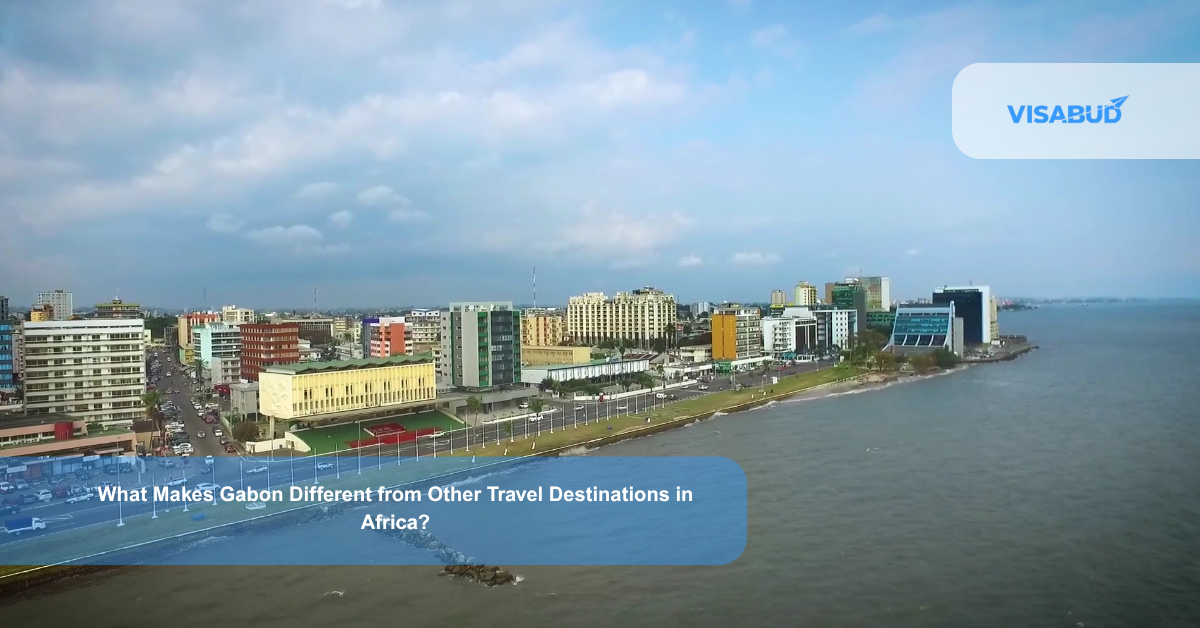
Meanwhile, the capital, Libreville, presents its own contrast. Thanks to the country’s oil wealth, Libreville can feel notably more modern and cosmopolitan than many other Central African cities, a juxtaposition between urban development and deep wilderness that adds another layer to the overall travel experience.
7. Waterfalls, Rivers, and Untouched Wilderness Beyond the Coast
While Loango and its beach-dwelling wildlife tend to get the most attention, Gabon’s interior offers its own distinct appeal. Ivindo National Park, for example, is known for dramatic waterfalls carving through dense rainforest, along with strong populations of elephants and gorillas. River cruises through Gabon’s waterways are a popular way to explore the country’s mangroves and interior forests, offering wildlife encounters crocodiles, birdlife, and more from the water rather than on foot or by vehicle.
This mix of habitats within a relatively small country is part of what makes Gabon so distinctive. Within a single trip, it’s possible to move between coastal wildlife, deep rainforest, savanna-forest transition zones, and river ecosystems, a level of ecological diversity that’s difficult to match elsewhere in Africa without covering vastly greater distances.
8. Safety and Political Stability
Central Africa doesn’t always have the safest reputation among international travelers, but Gabon stands out as a comparatively stable and secure destination within the region. It is generally considered safe for visitors, though as with any frontier or off-the-beaten-path destination, careful planning and reliance on experienced local guides remain important, particularly in remote areas where infrastructure is limited.
This relative stability, combined with the country’s conservation-led development, has allowed Gabon to build a tourism identity around quality over quantity of small numbers of well-managed, high-value trips rather than high-volume tourism.
Is Gabon the Right Trip for You?
Gabon isn’t a destination for travelers looking for a conventional safari checklist, budget backpacking route, or lively nightlife scene. It’s a destination for those who want genuine wilderness, dense rainforest, remote coastlines, rare primates, and ecosystems that remain largely unshaped by mass tourism.
If your idea of an unforgettable trip involves standing on an empty beach watching a forest elephant appear from the treeline, or trekking through jungle to encounter a gorilla family in silence, Gabon offers something that very few other places on Earth can match. It asks a little more of the traveler for more planning, more guided support, more comfort with remoteness but in return, it delivers an experience that feels genuinely rare in a world where so much of travel has become predictable.
That, ultimately, is what makes Gabon different from other travel destinations in Africa: not just what it has, but how little of it has been touched.
Planning a trip to Gabon? Contact us for travel assistance and guidance.