TL;DR :
A budget trip to Malawi is very doable once you’re on the ground, but flights and the visa will be your biggest costs.
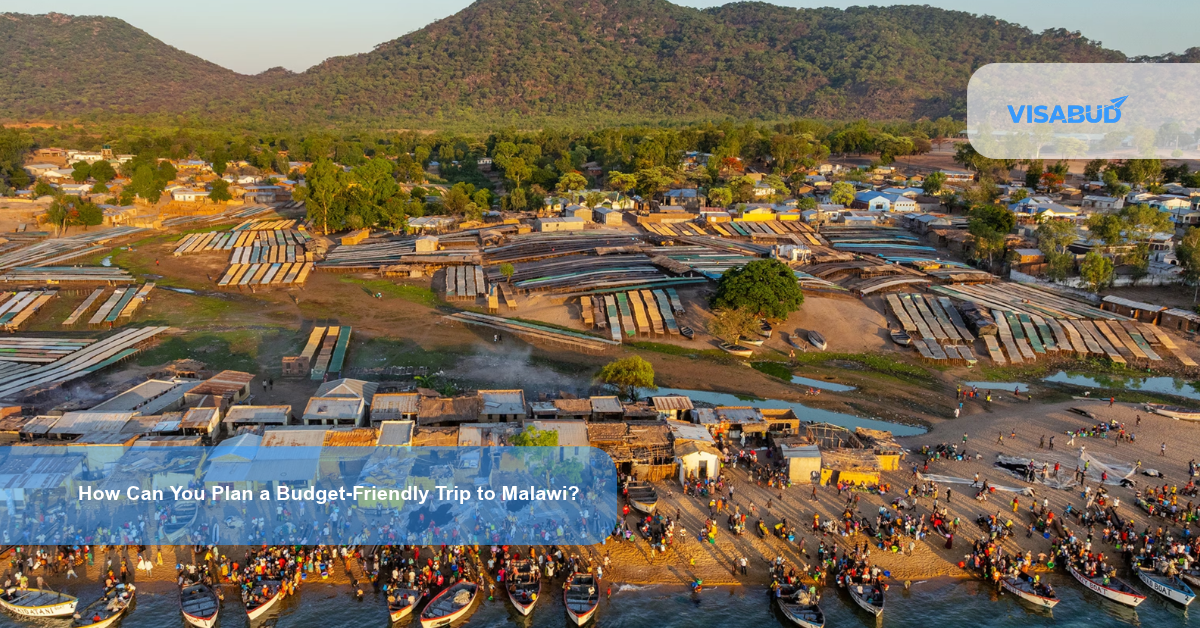
Malawi rarely tops anyone’s bucket list, and that works in your favour. The country is small and landlocked, and people there are known for their warmth. There are several excellent animal reserves, a sizable freshwater lake, and mountains that are accessible for hiking without a permit line. It also costs far less on the ground than its better-known neighbours. The catch is that getting there is not cheap, and a few planning mistakes can push the bill up quickly. The primary choices are covered in this guide in the order you will encounter them.
Start With the Visa
Visa rules in Malawi have shifted recently, so check this first. The country eased entry rules in 2024, but under regulations in effect since January 3, 2026, several previously exempt nationalities, including the US, UK, Canada, France and Belgium, need a visa again, with only limited reciprocity-based exemptions remaining. Later, an announcement said that from 24 February 2026, some nationalities in a second category could get a visa on arrival at designated ports of entry.
The fee itself is unclear. The Department of Immigration’s fee table lists US$75 for a single-entry visa, US$50 for transit, US$150 for a six-month multiple-entry visa and US$250 for a 12-month one. The e-Visa FAQ, meanwhile, shows US$50 for a single entry, so confirm the live amount before paying. If you apply online, the FAQ says processing takes about three working days. To submit an application, only utilize the official government portal. Third-party agents add their own charges.
Your nationality decides everything here. If you hold an Indian passport, check the current category on the official portal rather than relying on any blog, including this one.
Be Realistic About Flights
Airfare will probably be your largest expense. Lonely Planet’s budget advice for Malawi puts it plainly: most of your money will go on getting there, because flights are not cheap. Lilongwe is the main international gateway, and Blantyre also has some connections. Most itineraries from outside Africa connect through hubs such as Johannesburg, Addis Ababa or Nairobi.
A few ways to keep this cost down:
Choose the Right Season
Malawi’s dry season runs roughly from May to October. Roads are easier, wildlife is concentrated around water, and Lake Malawi is pleasant. The rains arrive around November and last until March or April. That period is greener and cheaper, but some rural roads get difficult and some lodges slow down.
For most budget travellers, May to June and September to October are the sweet spots. The weather is good and you avoid peak-season pricing.
What a Realistic Daily Budget Looks Like
Sources vary a lot, which is itself useful. One backpacker guide splits spending into three tiers: about US$8 to 10 a day for local guesthouses or camping and hitchhiking, US$25 to 50 for dorms and local transport, and US$150 or more for private transport and high-end stays. Another guide puts a basic day at roughly US$20 to 40, covering accommodation, meals and local transport.
Crowd-sourced spending data gives a useful middle view. Travellers have averaged about US$43 a day, which works out to around US$304 per person for a week, and about US$1,301 per person for a month. Those figures include sightseeing, intercity transport and food, so treat them as an average rather than a floor.
My own suggestion: plan for US$35 to 50 a day if you want a private room, a proper meal and a couple of paid activities, and assume the very low figures only work if you camp and hitchhike. Remember that exchange rates and prices for the Malawian kwacha move, so check conversions close to your travel date.
Getting Around Without Overspending
Minibuses. These shared vans are the backbone of local transport. One 2026 traveller guide lists 500 to 1,500 MWK for most urban routes, and 25,000 to 35,000 MWK for the Lilongwe to Blantyre run of four to five hours. Treat those numbers as a rough guide, since fares change with fuel prices. Minibuses leave when full, so mornings are the best time to travel. Travelling in the early hours also means less waiting.
Coaches. Larger buses connect the main cities and are more comfortable. They cost somewhat more than minibuses and are worth it on long hauls.
Hitchhiking. Some budget travellers swear by it. One long-time guide calls it easy and generally safe in Malawi. Still, use judgement. Avoid it after dark, and think carefully if you are travelling alone.
The Ilala ferry. The MV Ilala is a classic Lake Malawi experience. It is operated by Malawi Lake Services from Monkey Bay and is the best way to reach the inhabited islands of Likoma and Chizumulu. The same trip report reckons a cabin costs somewhere between 60,000 and 120,000 MWK depending on class. Cheaper deck options exist, but schedules can be unpredictable, so build slack into your plans.
Renting a car. This is usually the pricier route, but splitting the cost between three or four people can make it competitive, especially for national parks. Lonely Planet notes that Malawi’s parks allow self-drive safaris, which is a budget-saving option. Fuel was quoted at about 1,000 kwacha per litre in one guide, though prices change often.
Where to Sleep
Luxury lodges in Malawi are lovely, but nightly rates can reach several hundred dollars per person. The budget alternative is better than you might expect: most cities, parks and lakeshore communities have comfortable backpacker lodges and hostels, often with space for camping.
A few practical points:
Eat Like a Local
Food is where you can save the most without feeling you are sacrificing anything. The staple is nsima, a thick maize porridge served with relish such as beans, greens or fish. Lake fish, especially chambo, is the signature dish. The 2026 traveller guide above says the same fish meal that costs 15,000 to 30,000 MWK at a tourist lodge is much cheaper at a local eatery. A cup of local tea costs very little.
A tip that suits many readers: Malawi has a long-established Indian community, and Indian restaurants are described as a flavourful, affordable option. If you travel on a tight budget and miss familiar food, they are worth seeking out in Lilongwe and Blantyre.
One note on fish: Lake Malawi’s fish stocks have been declining from overfishing and climate change, so ordering it occasionally rather than at every meal is a considerate choice.
Do Wildlife and Adventure Cheaply
Boat safaris at Liwonde. Liwonde National Park is one of the most popular wildlife stops, known for elephants, hippos and birdlife along the Shire River. Group boat trips are the cheapest way in. One 2026 guide gives US$30 to 60 per person for a Liwonde boat safari. Ask whether park entry is included, because that varies.
Self-drive in the parks. If you have a group and a suitable vehicle, a self-drive visit costs far less than an all-inclusive package.
Hiking Mulanje. This is among the nation’s most affordable experiences. Lonely Planet says a guide plus mountain hut accommodation runs about US$25 a day, which is less than Kilimanjaro’s entrance fee alone, while adding cooks and porters brings it to roughly US$100 to 150 a day depending on group size. Going without a cook and carrying your own food cuts the total further.
Lake activities. Snorkelling, kayaking and swimming around Cape Maclear and Nkhata Bay cost little. Diving is available but adds up, so decide whether it is a priority before you go.
A Sample 12-Day Route
This route balances cost, travel time and variety. Treat the order as flexible.
If you have longer, the same backpacker guide suggests Livingstonia and the Nyika Plateau in the north. Skipping Likoma shortens things considerably, since the island trip is the most time-consuming part.
Money, Safety and Health Basics
Cash. Carry US dollars in good condition as a backup, but pay in kwacha where you can. Card acceptance is limited outside cities and bigger lodges, and ATMs can be unreliable, so withdraw when you find one that works.
Tipping. Small tips are customary. One guide suggests 1,000 to 2,000 MWK per bag for hotel porters and 10,000 to 20,000 MWK per person per day for guides and drivers.
Health. Malawi has malaria, so well in advance of your trip, discuss prophylaxis with a physician or travel clinic. Depending on your route, vaccination requirements may vary, including yellow fever. Take a doctor’s advice rather than a blog’s. Carry insurance that covers medical evacuation.
Safety. Malawi is widely regarded as relatively calm, but petty theft happens in busy places. Keep valuables out of sight, avoid walking alone at night, and check your government’s current travel advisory before you leave.
Respect local norms. Dress modestly away from the beach, ask before taking photographs of people, and buy crafts and food directly from local sellers when possible.
Putting It All Together
A realistic budget trip to Malawi looks like this: spend the most on flights and the visa, travel overland by minibus, sleep in guesthouses or camp, eat local food, and pick two or three paid experiences rather than ten. If you cover those basics, a two-week trip becomes much more affordable than people expect.
Check the current visa rules, confirm exchange rates just before departure, and leave some slack in the schedule. Malawi rewards travellers who slow down, and the most memorable parts of the trip tend to be the unplanned ones: a conversation on a minibus, an evening on a lakeshore, a meal in a village.
Contact Us to Plan Your Budget-Friendly Trip to Malawi