TL;DR
Burkina Faso is a landlocked, youthful West African nation (pop. ~24.6 million, median age ~18) whose name means “Land of Upright People” coined in 1984 by revolutionary leader Thomas Sankara, who renamed it from Upper Volta. It’s home to 60+ ethnic groups (mostly Mossi), hosts Africa’s biggest film festival (FESPACO) in capital Ouagadougou, and has a rich tradition of griot storytelling and mask art. Its economy runs on cotton, gold, and subsistence farming, but the country has been rocked by repeated military coups most recently in 2022, bringing young captain Ibrahim Traoré to power. Traoré’s government has cut ties with France, aligned with Russia, and postponed elections indefinitely amid an ongoing jihadist insurgency. Despite the instability, Burkina Faso retains a strong cultural identity rooted in music, food, religious coexistence, and resilience.
Tucked into the heart of West Africa, Burkina Faso is one of those countries that rarely makes international headlines for the right reasons, yet it holds a cultural, historical, and geographic story that deserves far more attention than it gets. From a name that literally means “Land of Upright People” to a revolutionary leader who tried to remake the country in his own image, Burkina Faso is packed with details most people never learn in school.
Whether you’re researching for travel, a school project, or simply curious about lesser-known nations, this guide brings together well-researched, up-to-date facts about Burkina Faso, its geography, people, history, culture, and current affairs all in one place.
1. The Name Itself Tells a Story
Burkina Faso wasn’t always called that. Until 1984, the country was known as the Republic of Upper Volta, a name inherited from French colonial rule and tied to the Volta River system that runs through the region. On August 4, 1984, revolutionary president Thomas Sankara renamed the country “Burkina Faso,” blending words from two of the nation’s major languages: “Burkina” (upright or honest, from Mòoré) and “Faso” (homeland or fatherland, from Dioula). The term as a whole approximately translates to “Land of Upright/Incorruptible People.” The nation’s citizens are referred to as Burkinabé.
2. It’s Landlocked and Surrounded by Six Countries
Burkina Faso covers roughly 274,000 square kilometers (about 105,900 square miles) similar in size to Colorado or the UK and has no coastline at all. It’s boxed in by six neighbors: Mali to the north and west, Niger to the east, Benin and Togo to the southeast, Ghana to the south, and Côte d’Ivoire to the southwest. This landlocked position has historically shaped its economy, since goods must pass through neighboring ports, and it has made regional stability especially important for trade and security.
3. A Young and Fast-Growing Population
Burkina Faso’s population has grown dramatically in recent decades. As of 2026, estimates put the population at roughly 24.6 million people, up from just around 10 million people three decades ago. The median age is strikingly young around 18 to 19 years old compared to a global median age in the low thirties. This makes Burkina Faso one of the most youthful nations on the planet, with a population structure shaped like a pyramid: broad at the bottom, narrow at the top.
Urbanization is also accelerating, with the capital city alone home to over 3 million people in its metropolitan area, even as most of the country remains rural and agricultural.
4. Ouagadougou : A Capital With Character
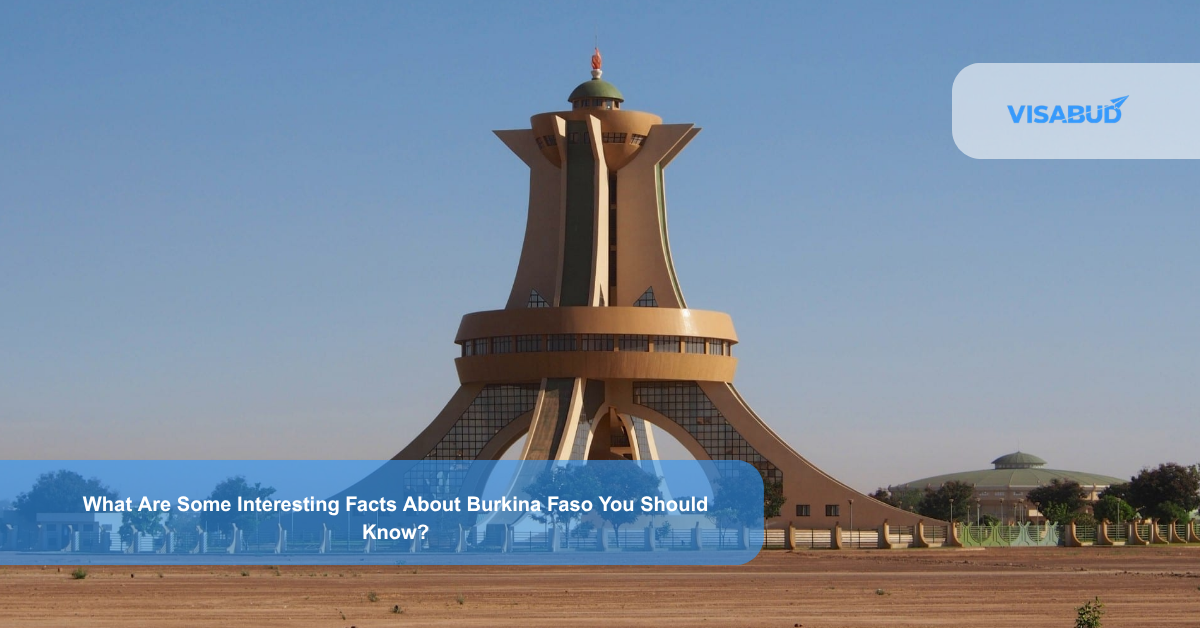
The capital, Ouagadougou (often shortened to “Ouaga” by locals), sits roughly in the geographic center of the country, about 800 kilometers from the Atlantic coast. It serves as the administrative, economic, and cultural heart of Burkina Faso and hosts FESPACO, the Panafrican Film and Television Festival of Ouagadougou the largest film festival on the African continent, held every two years and drawing filmmakers from across Africa and its diaspora.
5. More Than 60 Ethnic Groups and Languages
Burkina Faso is remarkably diverse for its size, home to more than 60 distinct ethnic groups. The largest is the Mossi people, making up roughly half the population, followed by groups including the Fulani (Peul), Bobo, Gurunsi, Senufo, Lobi, and Dioula, among many others. While French remains the official language of government, administration, and education, a legacy of French colonial rule that ended in 1960 the vast majority of Burkinabé speak an indigenous language at home, with Mòoré (the language of the Mossi) being the most widely spoken.
6. A Rich Musical and Artistic Heritage
Burkina Faso has a deep tradition of music, mask-making, and oral storytelling. The country is particularly known for its balafon (a wooden xylophone) traditions and its griot culture hereditary storytellers, historians, and musicians who preserve oral history through song and performance. Bobo-Dioulasso, the country’s second-largest city, is often considered its cultural and artistic capital, known for its vibrant music scene and colonial-era architecture.
Woodcarving and mask-making, especially among the Bwa and Bobo peoples, are also internationally recognized art forms, with many pieces held in museums worldwide.
7. Thomas Sankara: Africa’s “Che Guevara”
No list of Burkina Faso facts is complete without Thomas Sankara, the young army captain who seized power in 1983 and led the country until his assassination in 1987. In just four years, Sankara pursued sweeping reforms: mass vaccination campaigns, anti-corruption drives, land redistribution, tree-planting initiatives to combat desertification, and some of the most progressive gender-equality policies in Africa at the time, including banning female genital mutilation and forced marriage and appointing women to top government posts.
Sankara refused foreign aid he considered a form of neo-colonial control and famously sold off the government’s fleet of luxury cars in favor of the cheapest available vehicle. He remains a deeply divisive but widely admired figure across Africa, often compared to Che Guevara for his revolutionary politics and enduring symbolic status. He was assassinated in a coup in 1987, allegedly with foreign involvement, at just 37 years old.
8. A History Shaped by Military Coups
Political instability has been a recurring feature of Burkina Faso’s modern history. The country experienced its first military coup in 1966 and has seen numerous changes of government since but 2022 alone saw two coups in a single year. Lieutenant Colonel Paul-Henri Sandaogo Damiba ousted President Roch Marc Christian Kaboré in January 2022, citing failures to contain a growing jihadist insurgency. Just eight months later, Damiba himself was overthrown by a faction of junior officers led by Captain Ibrahim Traoré.
Traoré, who was only 34 at the time, became one of the youngest heads of state in the world. As of 2026, he remains in power as interim president, having extended the military transitional government’s timeline and postponed elections indefinitely, citing ongoing insecurity. His government has taken a firmly anti-Western, pro-sovereignty stance, severing diplomatic ties with France, deepening military cooperation with Russia, and joining Mali and Niger in withdrawing from the International Criminal Court and forming the Alliance of Sahel States (also called the Confederation of Sahel States), a bloc of military-led West African nations.
9. An Agricultural Economy Facing Real Challenges
Agriculture remains the backbone of Burkina Faso’s economy, employing a large majority of the workforce, primarily through subsistence farming of crops like millet, sorghum, and maize. Cotton is the country’s key cash crop, and Burkina Faso is consistently ranked among Africa’s largest cotton producers. In recent years, gold mining has grown in significance to the country’s economy and is currently one of its main export revenue generators.
Despite these resources, Burkina Faso remains one of the world’s poorer countries by GDP per capita, and the security crisis tied to jihadist insurgencies linked to al-Qaeda and ISIL-affiliated groups has displaced hundreds of thousands of people and disrupted farming, trade, and daily life across large parts of the country, particularly in the north and east.
10. Nature and Wildlife Worth Knowing About
Burkina Faso’s landscape ranges from savanna grassland in the north to sparse forest in the south, and it’s home to several protected wildlife areas. The Arli and W National Parks (the latter shared with Niger and Benin) support populations of elephants, lions, hippos, and antelope species, making the country a lesser-known destination for those interested in West African wildlife and ecotourism though ongoing insecurity has significantly limited tourism access in recent years.
11. Independence Day and National Identity
Burkina Faso gained independence from France on August 5, 1960, and this date is celebrated as the country’s National Day each year. Despite decades of political turbulence since independence, national identity remains strong, often expressed through pride in the country’s revolutionary history, its artistic traditions, and especially under the current government a renewed emphasis on sovereignty and self-reliance.
12. Food Culture Rooted in Grains and Community
Burkinabé cuisine reflects the country’s agricultural base and communal traditions. Staple dishes are built around grains like millet, sorghum, and rice, most famously in tô, a thick, dough-like porridge often served with a leafy green or okra-based sauce. Additionally popular are grilled meats sold as street food, referred to locally as brochettes, and riz gras, meaning “fat rice,” a one-pot dish made with meat, vegetables, and seasonings. Meals are typically shared from a common dish, reflecting broader West African traditions of communal eating and hospitality toward guests.
13. Religious Diversity and Coexistence
Burkina Faso is religiously diverse, with Islam practiced by the majority of the population around 60 to 65 percent alongside significant Christian communities and a substantial portion of the population that continues to practice traditional African religions or blends elements of indigenous belief systems with Islam or Christianity. Despite the recent security situation, Burkina Faso has historically been known for its comparatively peaceful religious tolerance, with interfaith marriages and shared community life popular in many places. years has introduced new religious and ethnic tensions in conflict-affected areas.
14. Education and Literacy Are Still Developing
Access to education in Burkina Faso has expanded significantly since independence, but challenges remain. Literacy rates, while improving, still lag behind global averages, and rural areas in particular face shortages of schools, teachers, and learning materials. The ongoing insurgency has forced the closure of thousands of schools in conflict-affected regions, disrupting education for large numbers of children. Despite this, Ouagadougou is home to several universities, including the University of Ouagadougou (now known as Joseph Ki-Zerbo University), one of the oldest and most prominent institutions of higher learning in the Sahel region.
Final Thoughts
Burkina Faso may be landlocked and often overlooked in global conversations, but it’s a country defined by resilience: a young and rapidly growing population, extraordinary ethnic and linguistic diversity, a globally influential film festival, and a revolutionary history that still shapes its politics today. Understanding Burkina Faso means looking past the headlines about coups and conflict to appreciate a nation with deep cultural roots and a population determined to shape its own future.
As the political and security situation continues to evolve, Burkina Faso remains a country worth watching not just for what’s happening in its government, but for the rich human story that continues underneath it.
Planning to visit Burkina Faso? Contact Us for visa assistance.