TL;DR :
El Salvador has gone from one of the region’s riskiest destinations to one of its safest, with homicide rates down to roughly 1.3 per 100,000 and a U.S. State Department Level 1 rating the same tier as Switzerland and Japan. That shift fueled a tourism boom: 4.1 million visitors and $3.6 billion in revenue last year, already on pace to be topped this year, outgrowing both Costa Rica and Panama. World-class surf at El Tunco and Bitcoin Beach, a day trip from the volcano to the sea close to Santa Ana and Lake Coatepeque, a reimagined capital with major international concerts, and colonial towns like Suchitoto without exorbitant costs are all part of the attraction. It’s visa-free and dollar-based for U.S. travelers, making logistics simple. The one honest caveat: the security gains stem from an ongoing state of exception limiting certain constitutional rights, worth knowing about even though it hasn’t affected the visitor experience. Bottom line it’s an easy, affordable, increasingly popular trip, and a good year to go before the crowds catch up.
Ten years ago, almost nobody outside Central America was putting El Salvador on a vacation shortlist. Today, it’s one of the fastest-growing travel destinations in the Americas, and the reasons behind that shift are worth paying attention to before you book your next trip somewhere more predictable.
This is a small country you can drive from the Pacific coast to the highlands in a few hours but it packs in surf towns, volcanoes, colonial villages, and a capital city that’s reinventing itself, all without the crowds you’d fight through in Costa Rica or Mexico. Here’s why it merits careful consideration.
The Safety Story Nobody Saw Coming
For years, El Salvador’s reputation was shaped by one grim statistic: a homicide rate that hit over 100 per 100,000 people at its worst. That history is real, and it’s fair for travelers to ask about it. But it’s also outdated.
By the end of last year, the country recorded its lowest homicide count in recent history, with the rate falling to roughly 1.3 per 100,000 inhabitants, a level that puts It is comparable to several Western European nations. The shift has been dramatic enough that the U.S. State Department reclassified El Salvador to Level 1, its safest travel advisory category, placing it alongside Switzerland, Japan, and Australia in terms of official risk assessment.
That doesn’t mean every corner of the country is equally relaxed, normal urban precautions still apply in cities like San Miguel, and it’s smart to stay aware at night anywhere. But the broad picture has changed enough that embassies, airlines, and hotel chains are treating El Salvador as a mainstream destination rather than a risk to be managed.
The Numbers Behind the Boom
The safety turnaround shows up directly in visitor numbers. El Salvador closed last year with 4.1 million international arrivals, the highest total in its history and a 92% jump compared to pre-pandemic levels. Tourism revenue reached roughly $3.6 billion for the year, more than triple what it was in 2019.
That growth hasn’t slowed down. In just the first four to five months of this year, the country had already welcomed more than 2 million international visitors, putting it on pace to beat last year’s record and pushing it past both Costa Rica and Panama in year-over-year tourism growth. Major hotel brands, including JW Marriott and Hilton, have opened or announced new properties to keep up with demand.
What’s notable is where these travelers are coming from. Guatemala has overtaken the United States as the top source market, which tells you something about how the region itself now sees El Salvador as a place worth crossing a border for, not just a stopover.
What Actually Draws People There
Numbers explain the trend, but they don’t explain the appeal. A few things do.
Surf City and the Pacific coast. WSL-certified events are now held along the La Libertad coastline, which has gained a reputation among surfers for reliable, world-class breakers. El Tunco and El Zonte (better known as “Bitcoin Beach”) have grown from sleepy fishing villages into laid-back surf towns with beach bars, boutique hostels, and a genuinely international crowd, without losing the low-key feel that made them attractive in the first place.
The volcano-to-sea circuit. Few countries let you hike an active volcano in the morning and watch the sunset over the ocean the same evening. El Salvador’s compact geography makes that kind of day realistic, not just a brochure line. Santa Ana Volcano, Cerro Verde National Park, and the turquoise crater lake at Lake Coatepeque are all within a short drive of each other.
Bitcoin curiosity. Since El Salvador became the first country to adopt Bitcoin as legal tender, El Zonte in particular has become something of a pilgrimage site for crypto enthusiasts who want to pay for a coffee or a surf lesson entirely in Bitcoin. You don’t need to care about cryptocurrency to enjoy the beach, but it adds a genuinely unusual layer to the trip.
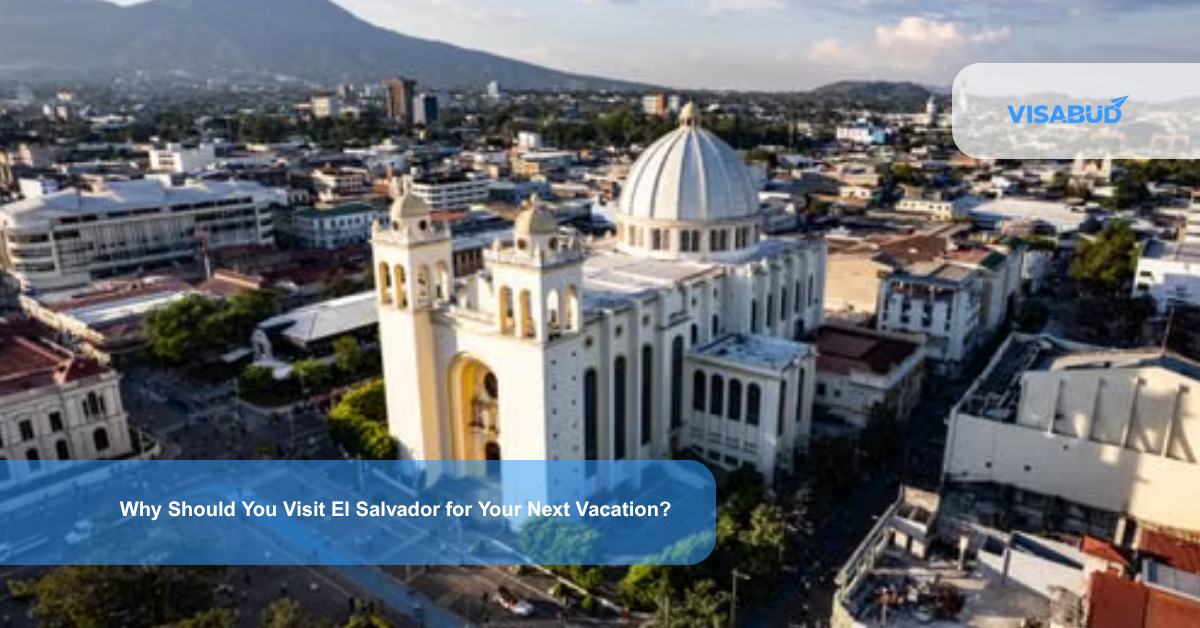
San Salvador’s reinvention. The capital has been investing heavily in public spaces, security, and cultural venues, and it shows. Concerts by major international artists, including a sold-out multi-night residency by Shakira, have put the city on the touring map in a way that would have been unthinkable a decade ago.
Colonial towns without the tourist markup. Places like Suchitoto retain the cobblestone-street, whitewashed-church charm you’d associate with much pricier destinations in Mexico or Guatemala, but without the same volume of foot traffic or inflated prices.
Practical Reasons It’s an Easy Trip
Beyond the scenery, there are a few logistical reasons El Salvador works well as a vacation choice. U.S. citizens don’t need a visa and simply pick up a tourist card on arrival for a small fee. The country uses the U.S. dollar as its currency, which removes the usual guesswork around exchange rates and currency conversion. And because it’s genuinely small, you can build an itinerary that covers beach, volcano, and colonial town without the long transfer days that eat into vacations in larger countries.
A Few Honest Caveats
No destination is without nuance, and it’s worth saying plainly: El Salvador is currently under a state of exception that has limited certain constitutional rights as part of the government’s security crackdown. This is the policy most directly responsible for the drop in crime, but it’s also a legitimate point of debate, and travelers who follow international news may have questions about it. It hasn’t affected the visitor experience in any meaningful way so far, and arrivals have continued climbing regardless, but it’s a fair thing to be aware of before you go, and worth researching independently if it matters to how you choose where to travel.
Frequently Asked Questions
Q : Is El Salvador actually safe for tourists right now?
By most current measures, yes. The country’s homicide rate has dropped sharply, and the U.S. State Department now rates it at Level 1, its safest travel category. Standard travel awareness still applies, especially in less touristy urban areas.
Q : Do I need a visa to visit?
U.S. citizens don’t need a visa. You’ll get a tourist card for a small fee upon arrival, and your passport needs at least six months of validity remaining.
Q : What currency does El Salvador use?
The U.S. dollar is the official currency, alongside Bitcoin, which is also legal tender. You won’t need to exchange money if you’re coming from the U.S.
Q : Which season is ideal for travel?
The dry season, roughly November through April, offers the most consistent weather for beach days and volcano hikes. Surfers often prefer the wetter months for bigger swells.
Q : Is El Salvador excellent for a beach holiday or more of an adventure trip?
Both, honestly. You can spend a week purely surfing and relaxing along the Pacific coast, or combine a few beach days with volcano hikes, lake visits, and time in colonial towns like Suchitoto.
Q : How does El Salvador compare to Costa Rica for a first-time visitor?
It’s smaller, less crowded, and generally more affordable, with a lower profile that means fewer tourist markups. Costa Rica has more established eco-tourism infrastructure, but El Salvador’s growth over the past two years has closed that gap quickly.
Q : Is the cost of traveling there high?
Not particularly. Because the tourism boom is relatively recent, prices for accommodation, food, and activities are still noticeably lower than in more established Central American destinations, though that’s shifting as international hotel chains expand.
The Bottom Line
El Salvador’s turnaround isn’t a marketing slogan; it shows up in the crime statistics, the advisory levels, and the millions of travelers who’ve chosen to visit over the past two years. In exchange, you gain access to a nation with a capital city that hosts international concerts, a colonial village, an active volcano, and a surf town of each other, at a fraction of the crowd and cost of more established destinations. For travelers who like being early to a place before everyone else catches on, this might be the year to go.
Contact Us for guidance on your El Salvador travel plans.