TL;DR :
Whether tourists need a visa for Moldova depends on nationality. Citizens of the EU, UK, US, Canada, and several other countries can enter visa-free for up to 90 days. Most other travelers, including Indians, need to apply for an eVisa online (processing takes 10–20 days) unless they hold a valid multiple-entry Schengen, UK, US, or Canadian visa, which can waive the Moldovan visa requirement entirely. Across the board, travelers should carry a passport valid several months beyond their trip, proof of funds (~€30/day), travel insurance (~€30,000 coverage), a return ticket, and accommodation details. A July 2026 law tweaked exemption rules for about 29 nationalities, so it’s worth double-checking current requirements before booking.
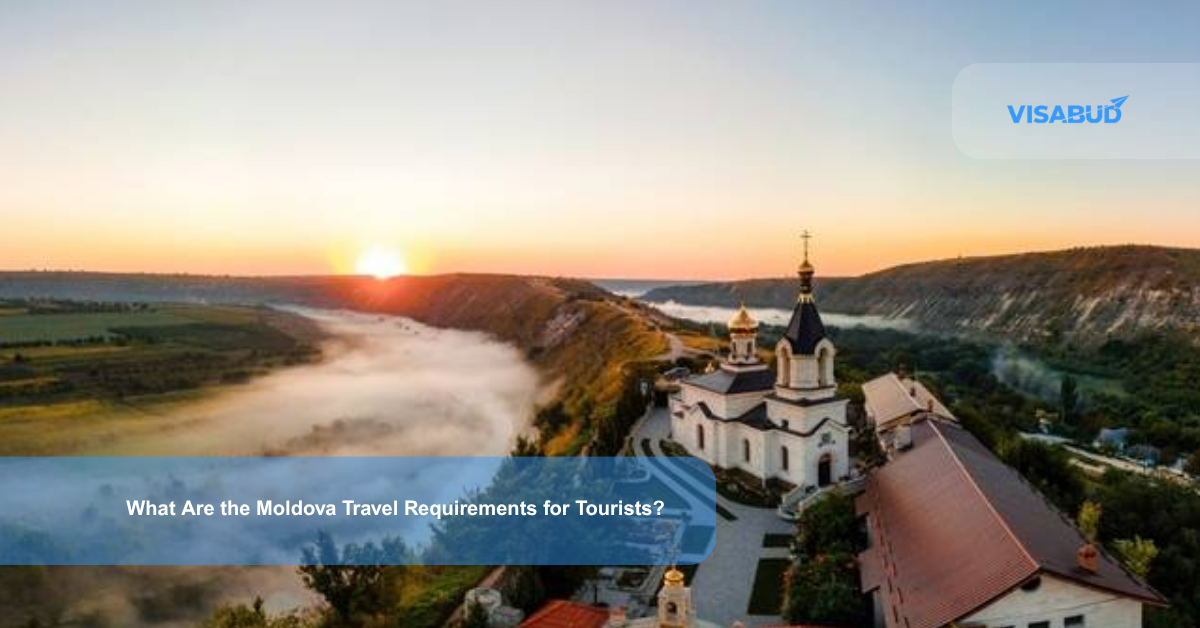
Moldova doesn’t come up in casual travel conversations as often as Italy or Thailand, and that’s exactly what makes it interesting. Wedged between Romania and Ukraine, this small Eastern European country is quietly building a reputation among travelers who want wine cellars carved into limestone, medieval monasteries, and cities that haven’t been reshaped for tourist buses. But before any of that, there’s the practical question every traveler eventually has to answer: what do you actually need to enter Moldova as a tourist?
The honest answer depends heavily on your passport. Moldova’s entry rules aren’t a single set of instructions that apply to everyone; they split into a few clear paths based on nationality, and 2026 has brought a few updates worth knowing before you book anything. This guide walks through all of it in plain language, without the legal jargon that usually clutters official visa pages.
The Short Version : It Depends on Your Passport
Broadly, travelers fall into one of three groups when it comes to Moldova :
1. Visa-free travelers citizens of the EU, UK, US, Canada, Switzerland, and a long list of other countries can enter Moldova for tourism without applying for anything in advance.
2. eVisa-eligible travelers a separate group of nationalities can apply online through Moldova’s official electronic visa system before their trip.
3. Sticker-visa travelers a smaller number of nationalities still need to visit an embassy or consulate and apply for a traditional visa in person.
Regardless of which group you fall into, a handful of baseline requirements apply to almost every visitor: a valid passport, proof of onward travel, adequate funds, and increasingly, valid travel insurance. Let’s break each of these down.
Visa-Free Entry : Who Qualifies
If you’re traveling from within the European Union, the United Kingdom, Switzerland, Norway, Iceland, the United States, Canada, Australia, Japan, South Korea, or several neighboring and CIS countries, you generally don’t need a visa to visit Moldova for tourism. The standard allowance is up to 90 days within any 180-day period, which is more than enough time for even an unhurried road trip through wine country and the capital, Chișinău.
That said, “visa-free” doesn’t mean “no questions asked.” Border officers can and do check that you have :
Skipping these isn’t illegal, but showing up without them is a good way to spend an extra half hour at immigration explaining yourself.
The eVisa Route : A Middle Ground
For travelers whose passports don’t fall into the visa-free category, Moldova runs an electronic visa system through its official portal. This is generally the most convenient option if you fall outside the visa-free list. Indian citizens, for example, typically need to apply through this system, and there’s no need to visit an embassy in person or hand over your passport for processing.
The eVisa (technically a Type C short-stay visa) usually allows a stay of up to 90 days within a 180-day window, though the exact validity depends on what you request and what’s approved. Processing generally takes somewhere between 10 and 20 working days, so this isn’t something to leave until the week before departure. Applying at least a month ahead gives you a reasonable buffer, especially during busier travel seasons.
Documents typically requested for the eVisa include :
One detail that trips people up: the eVisa fee is non-refundable, even if your application is denied. It’s worth double-checking every field before submitting rather than rushing through it.
An Important Shortcut for Some Travelers
Here’s a detail that a lot of general visa guides gloss over. If you already hold a valid, multiple-entry Schengen visa, or a valid visa or residence permit from the UK, US, or Canada, you may be able to enter Moldova without applying for a separate Moldovan visa at all even if your nationality would normally require one. This exemption generally applies for stays of up to 90 days and doesn’t extend to transit visas or single-entry visas that have already been used.
This is genuinely useful if you’re combining a Moldova trip with a broader European itinerary. Someone flying into Paris or Berlin on a valid multiple-entry Schengen visa, for instance, may be able to add Chișinău to the trip without any extra paperwork, as long as the Schengen visa remains valid for the full journey. It’s a small planning detail that can save weeks of processing time, so it’s worth checking whether it applies to you before assuming you need a fresh Moldovan visa.
Worth noting: a legal change that took effect in July 2026 adjusted how this exemption applies to a specific group of around 29 nationalities, while keeping the core EU/Schengen/UK/US/Canada waiver intact. If your passport falls outside the usual Western visa-free list, it’s worth checking Moldova’s official immigration resources or a recent embassy update rather than relying on older blog posts, since this is an area that has genuinely shifted this year.
What About Travelers Who Need a Traditional Visa?
A smaller group of nationalities, along with anyone traveling on a refugee or alien travel document, still needs to apply for a sticker visa the traditional way through a Moldovan embassy, or where none exists, often through a Romanian mission that handles Moldovan visa matters. This route usually requires :
This process tends to take longer than the eVisa, often several weeks so anyone in this category should start well before their planned travel dates.
Passport Validity : Don’t Cut It Close
Across almost every category of traveler, one rule keeps repeating: your passport needs to be valid for a stretch of time beyond your trip, not just for the dates you’re actually in Moldova. Requirements you’ll commonly see are either three or six months of remaining validity past your departure date, along with at least one or two blank visa pages. Airlines checking documents before boarding are often stricter than border officers themselves, so a passport that’s technically fine but cutting it close can still cause boarding problems before you even reach Moldova.
Money, Insurance, and Proof of Accommodation
Moldova expects visitors to demonstrate they can actually afford their stay. The commonly cited benchmark for tourist visas is proof of funds equivalent to around 30 euros per day, with a minimum threshold for shorter trips. This can usually be shown through bank statements, though the exact documentation expected varies depending on whether you’re applying for an eVisa or arriving visa-free.
Travel medical insurance has also become a more consistently enforced requirement, particularly for eVisa applicants. Coverage valid in Moldova, typically with a minimum amount around 30,000 euros, is commonly requested. Even travelers entering visa-free may be asked to show proof of insurance or purchase a local policy at the border if they can’t.
Accommodation proof is usually simply a hotel booking confirmation, or an invitation letter if you’re staying with someone in Moldova. Border officers may ask about it directly rather than requesting a printed document, so having the details ready on your phone is generally enough.
Entering by Air or by Land
Most tourists arrive through Chișinău International Airport, which handles the bulk of Moldova’s international flights. Land border crossings from Romania and Ukraine are also common, with crossings like Leușeni, Sculeni, and Cahul frequently used by travelers combining Moldova with a wider regional trip. The immigration process at these points is generally the same: passport check, questions about your trip, and occasionally a request to see your return ticket or accommodation details.
If you’re driving into Moldova, keep your vehicle’s registration documents on hand, along with proof of valid insurance for driving in the country, since this is checked separately from your personal travel documents.
Currency, Health, and Practical Extras
Moldova’s currency is the Moldovan Leu (MDL), and while cards are increasingly accepted in Chișinău, cash is still useful outside the capital, particularly at smaller wineries and rural guesthouses. There’s no widely required vaccination for entry, though routine travel vaccinations are always worth checking with a doctor ahead of any international trip, especially if you’re arriving from a region with specific health advisories.
A Few Practical Tips Before You Book
Moldova rewards a bit of upfront planning with a trip that feels refreshingly uncrowded. Once the paperwork is sorted, what’s left is genuinely worth the effort: centuries-old wine cellars, quiet countryside, and a capital city that hasn’t yet been flattened into a tourist template.
About the Author
This article was written by Santosh Avarolli
Connect with him on LinkedIn
Frequently Asked Questions
1. Do tourists need a visa to visit Moldova?
It depends on your nationality. Citizens of the EU, UK, US, Canada, and several other countries can enter visa-free for up to 90 days. Travelers from many other countries, including India, generally need to apply for an eVisa or a sticker visa in advance.
2. How long can tourists stay in Moldova without a visa?
For visa-free nationalities, the standard allowance is 90 days within any 180-day period. This applies specifically to tourism and similar short-term visits, not to work or long-term stays.
3. What is Moldova’s eVisa, and who needs it?
The eVisa is Moldova’s official online visa system for travelers whose nationality doesn’t qualify for visa-free entry. It’s generally used for short tourist visits and is applied for entirely online through the government portal before departure.
4. How long does it take to get a Moldova eVisa?
Processing typically takes around 10 to 20 working days, though it can vary based on the season and how complete the application is. Applying at least a month in advance is a safe approach.
5. Can Indian citizens get a Moldova visa on arrival?
No, a visa on arrival isn’t available for Indian passport holders. Indian citizens generally need to apply for an eVisa online before traveling, unless they qualify under the Schengen/UK/US/Canada visa exemption.
6. Can a valid Schengen visa be used to enter Moldova?
In many cases, yes. Travelers holding a valid, multiple-entry Schengen visa (or a valid UK, US, or Canadian visa or residence permit) may be able to enter Moldova without a separate Moldovan visa, generally for up to 90 days.
7. How much money do I need to show for a Moldova tourist visa?
A commonly cited requirement is proof of funds of around 30 euros per day of your stay, with a minimum threshold for shorter trips. Bank statements are typically used to demonstrate this.
8. Is travel insurance mandatory to enter Moldova?
It’s increasingly expected, particularly for eVisa applicants, with a commonly cited minimum coverage of around 30,000 euros valid within Moldova. Even visa-free travelers may be asked to show proof of coverage.
9. What is the minimum passport validity required for Moldova?
Requirements vary by nationality and entry type, but a passport valid for at least three to six months beyond your departure date, with blank pages available, is the safest standard to follow.
10. Which airports and border crossings do tourists typically use to enter Moldova?
Most tourists fly into Chișinău International Airport. Common land crossings include Leușeni, Sculeni, and Cahul, primarily used by travelers arriving from Romania or Ukraine.
11. Do I need a return ticket to enter Moldova?
Yes, border officials commonly ask for proof of a return or onward ticket, regardless of whether you’re entering visa-free or with a visa.
12. Can a tourist visa for Moldova be extended once inside the country?
Tourist visas are generally not extended as a rule. Some visitors may be able to apply through local migration authorities in specific circumstances, but leaving and reapplying is usually the more reliable route.
13. Is there a digital nomad visa for Moldova?
As of now, there isn’t a distinct, widely published digital nomad visa category. Remote workers should be cautious about blending tourism and long-term work intentions under a standard tourist entry.
14. What documents are commonly required for a Moldova eVisa application?
Typical requirements include a valid passport, a recent photograph, proof of accommodation, return or onward flight details, evidence of sufficient funds, and valid travel insurance covering Moldova.
15. Has Moldova’s visa policy changed recently?
Yes. A legal amendment that took effect in July 2026 adjusted certain visa-exemption rules for a specific group of nationalities, while keeping the core EU, Schengen, UK, US, and Canada waiver arrangements unchanged. It’s worth checking current official sources before traveling, since this is an area that has shifted this year.
Contact Us for Moldova Travel Guidance