TL;DR :
Benin is one of West Africa’s most budget-friendly destinations. Backpackers can get by on $20–35/day using shared taxis (sept-places), moto-taxis (zemidjans), local maquis food, and basic guesthouses; mid-range travelers should budget $45–75/day. Factor in a one-time e-visa (~$55–125 depending on entry type, cheapest direct from the official portal), and treat Pendjari National Park as a separate expense safaris there run $130–400+ for a couple of days once you add park fees, mandatory guides, and lodging. A realistic two-week trip covering Cotonou, Ganvié, Ouidah, Abomey, and a short Pendjari add-on lands around $855–1,140 total (excluding flights), or $500–650 if you skip the safari and stick to the south.
Benin doesn’t show up on many “top West Africa destinations” lists, and honestly, that’s part of the appeal. While travelers pile into Morocco or Senegal, Benin quietly offers stilted lake villages, the spiritual home of Voodoo, and one of the last great wildlife parks in West Africa all without the crowds or the price tag that usually comes with “off the beaten path.”
But because it’s less visited, reliable cost information is harder to find. Most blog posts either quote a suspiciously low “$20 a day” figure with no breakdown, or they lump Benin in with generic “Africa travel” content that doesn’t reflect what’s actually happening on the ground in Cotonou, Ouidah, or Natitingou right now. This guide breaks down real numbers visas, transport, food, accommodation, and activities so you can build a budget that actually holds up once you land.
Quick Answer : What Does a Day in Benin Cost?
If you just want the headline figure: a genuine backpacker traveling on local transport, staying in basic guesthouses, and eating street food can get by on roughly $20–35 USD per day. A more comfortable mid-range trip with private rooms with fans or AC, the occasional taxi, restaurant meals lands closer to $45–75 USD per day. Add a Pendjari National Park safari to either budget and expect a noticeable spike for those specific days, since wildlife tourism is priced separately from everything else in the country.
Below, we’ll unpack exactly where that money goes.
Understanding Benin’s Currency First
Benin uses the West African CFA franc (XOF), shared across most of Francophone West Africa. It’s pegged to the euro, which keeps it relatively stable compared to currencies that float freely. Prices throughout this guide are given in CFA with USD equivalents, but because exchange rates shift, it’s worth checking a live converter before you finalize your budget. Cash is still king outside Cotonou card acceptance is limited to upscale hotels and a handful of restaurants in the capital, so plan on withdrawing CFA from ATMs in larger towns and carrying enough for rural stretches where machines are scarce.
Visa Costs : The Fixed Expense You Can’t Avoid
Before you even think about daily spending, factor in the e-visa, which every non-ECOWAS traveler needs.
A word of caution: several third-party visa sites charge noticeably more, sometimes double for the same document, bundling in “service fees” that aren’t obvious upfront. Applying directly through the official portal is the cheapest and safest route. ECOWAS nationals, and travelers from several other African countries, can typically enter visa-free, so it’s worth checking your specific passport’s status before budgeting for this at all.
Either way, treat the visa as a one-time cost outside your daily budget; it doesn’t scale with trip length in a linear way, so a longer trip actually makes the per-day cost of the visa shrink.
Accommodation : Where Your Money Goes Furthest
Benin doesn’t have a developed hostel scene in the European sense dorm beds are genuinely rare. Instead, budget travelers rely on small, family-run guesthouses called auberges.
Budget tier (basic auberge, fan room, shared or private bathroom) : 15,000–25,000 CFA per night (roughly $25–42 USD)
Mid-range tier (private room, en-suite, sometimes AC) : 30,000–50,000 CFA per night (roughly $50–85 USD)
Comfort/business hotels in Cotonou : 60,000 CFA and up ($100+ USD), scaling toward international hotel pricing near the airport
A practical tip: rooms in Cotonou and Porto-Novo tend to run more expensive than equivalent rooms in smaller towns like Abomey, Grand-Popo, or Natitingou, so if you’re trying to stretch a budget, spend fewer nights in the capital and more in secondary towns where you’ll also get a more authentic slice of daily life.
Getting Around : Zems, Sept-Places, and Buses
Transportation is where Benin genuinely earns its reputation as a budget-friendly destination as long as you’re comfortable with a bit of chaos.
Zemidjans (moto-taxis) : These motorcycle taxis are the backbone of getting around any town in Benin. Short rides within a city typically cost 150–500 CFA (about $0.25–$0.85), making them almost negligible in a daily budget even if you take several per day.
Shared taxis (sept-places) : For intercity travel, these shared vehicles, technically seven-seaters, though they’re often more crowded are the standard budget option. A trip from Cotonou to Ouidah, for example, runs around 1,500 CFA (roughly $2.50), while longer routes toward the north cost proportionally more.
Intercity buses : Companies like ATT and Comfort Lines run air-conditioned coaches between major towns, including routes up toward Natitingou in the north. These cost more than a bush taxi but come with guaranteed seating, fixed schedules, and considerably more comfort on long hauls worth the small premium if you’re covering serious distance.
Private car and driver : If you want to skip public transport entirely for a day of sightseeing, hiring a car with a driver runs somewhere around 50,000 CFA per day ($85 or so), which becomes more reasonable if split between two or three travelers.
For a two-week trip covering the south (Cotonou, Ouidah, Ganvié) and a push north toward Abomey or Natitingou, budgeting somewhere between $40–80 USD total for ground transport is realistic if you stick mostly to shared taxis and buses.
Food : Street Food vs. Restaurant Dining
Eating well in Benin doesn’t have to be expensive, and honestly, some of the best meals come from the cheapest places.
Street food and local maquis (small family-run eateries) : Expect to pay 1,000–4,000 CFA per meal ($1.70–$6.70). Dishes like amiwo (a spiced corn-based dish), grilled fish, and beans with rice are filling, cheap, and everywhere.
Casual sit-down restaurants : A modest meal runs 3,000–6,000 CFA per person ($5–$10).
Upscale restaurants, mostly in Cotonou : Dinner can climb to 15,000 CFA or more per person ($25+), especially at places catering to expats and business travelers.
Bottled water, snacks, and the occasional cold Beninoise (the local beer) add small amounts on top, but a traveler eating mostly local food can realistically keep daily food costs under 6,000–8,000 CFA ($10–$14), while still eating well and trying a wide range of dishes.
Activities and Attractions: Where Costs Vary Most
This is the category where your budget can swing dramatically depending on what you prioritize.
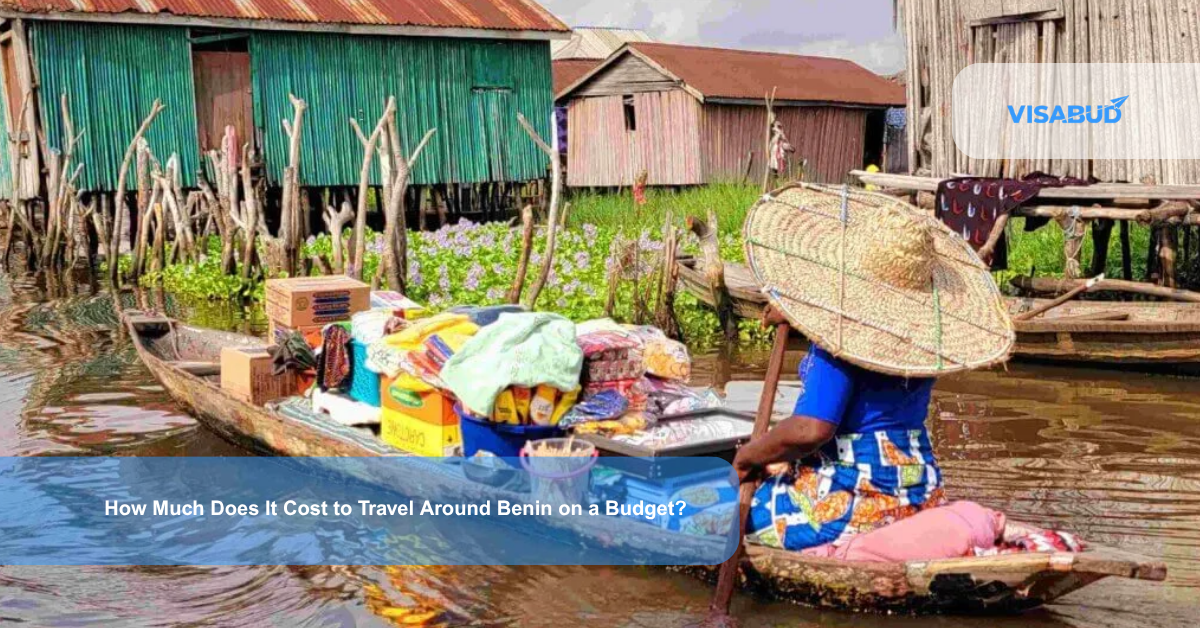
Ganvié floating village : A boat tour of this stilted lake village near Cotonou is one of Benin’s signature experiences and is reasonably affordable, typically running in the range of a few thousand CFA per person depending on tour length and group size.
Ouidah’s historical sites : Entry to sites tied to the Door of No Return and the Sacred Forest is generally low-cost, often just a few hundred to a couple thousand CFA per site.
Abomey’s royal palaces (UNESCO site) : Entry fees here are modest, usually in the low thousands of CFA, and a local guide often required or strongly recommended adds a small additional cost.
Pendjari National Park : This is the outlier, and it’s worth budgeting for separately. Park entrance fees for foreign visitors run around 10,000 CFA per person (about $15–17), plus a smaller per-vehicle fee. On top of that, a guide is mandatory inside the park, and hiring a guide with a 4×4 vehicle typically costs somewhere in the range of $50–80 USD per day, sometimes bundled into multi-day packages that include lodging. All-in, a two-day Pendjari safari with lodging can range from roughly $130 to well over $400 depending on whether you’re camping, staying in a mid-range lodge, or booking a premium package. If wildlife viewing is a priority, treat this as its own line item rather than trying to fit it into an average daily budget.
Putting Together a Sample Two-Week Budget
Here’s what a realistic backpacker-style two-week itinerary might look like, covering Cotonou, Ganvié, Ouidah, Abomey, and a short Pendjari add-on :
Rough total: $855–1,140 USD for two weeks, excluding international flights. Cut the Pendjari trip and stick to budget guesthouses throughout, and you could comfortably shave that down toward $500–650 for the same two weeks in the south alone.
Tips to Stretch Your Benin Budget Further
A few small habits make a real difference over the course of a trip :
Final Thoughts
Benin sits comfortably among the more affordable countries in West Africa to explore, and the numbers back that up a disciplined backpacker really can get by on $25–35 a day outside of a national park visit, while a more comfortable traveler can still see everything the country offers for well under $100 a day. The one place your budget needs real flexibility is Pendjari National Park, where wildlife tourism pricing operates on its own scale entirely.
Costs here move a little more than in heavily touristed destinations, partly because Benin’s tourism infrastructure is still developing and partly because currency conversions shift over time. Building in a 10–15% buffer above whatever you calculate is a sensible habit for any trip here and given how much value the country offers for the money, that buffer is unlikely to go to waste.
Ready to explore Benin? Contact us for personalized trip planning and budget tips.