TL;DR
Written for travelers planning a first trip. Check dates, fees and park rules with the Rwanda Development Board (RDB) or a licensed operator before you book, because tourism policies here change from year to year.
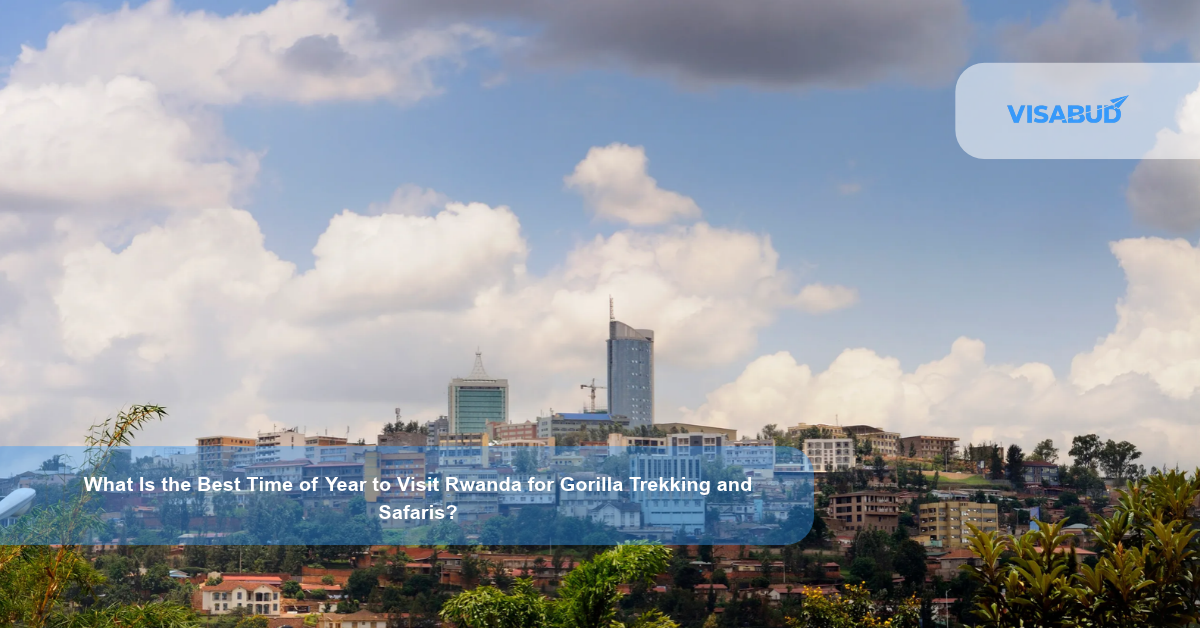
Ask ten people who have trekked with mountain gorillas when to go to Rwanda and you’ll get at least three different answers. That’s because the best time depends on what you value most: dry trails, lower costs, fewer people, birdlife, or a safari that runs smoothly alongside your trek.
This guide covers how Rwanda’s seasons work, what each one means for gorilla trekking in Volcanoes National Park, how the picture changes for Akagera and Nyungwe, and how to choose your own window.
The short answer
The best months to visit Rwanda, according to most tourists, are June through September.It is the main dry season in Akagera, with clearer skies, better routes, and the finest wildlife watching. December to February is the second-best window, a shorter dry spell that is quieter and often a little cheaper.
Gorillas can be trekked all year, though. If you can handle mud and the occasional downpour, the wetter months offer lower prices and fewer visitors, and you can still have a great trek.
How Rwanda’s seasons actually work
Rwanda sits just south of the equator, but its altitude keeps it much cooler than most people expect. Kigali is around 1,500 meters above sea level, and the gorilla habitat in Volcanoes National Park climbs well above 2,400 meters. Temperatures stay fairly steady through the year, so the real seasonal difference is rainfall rather than heat.
There are four broad periods:
Climate has been less predictable in recent years, so treat these as patterns rather than guarantees. A dry-season trek can still include rain, and a “wet” month can deliver a week of clear weather. Always pack for both.
Best time for gorilla trekking
A gorilla trek is physically the most variable part of a Rwanda trip. You may hike for as little as an hour or as much as several hours, depending on where your assigned family has traveled that day. Once you reach them, you get one hour with the group.
June to September: easiest conditions
In the dry months, the volcanic slopes are less slippery, the bamboo and nettle sections are easier to push through, and photos tend to come out brighter. The gorillas don’t move much differently by season, but the trek is generally more comfortable.
The tradeoff is demand. This is peak season, so permits sell out faster and lodges near Musanze fill up. If you want to travel in these months, booking a few months ahead is wise. Operators commonly suggest three to six months in advance for the high season.
December to February: a quieter dry window
This second dry period gives you reasonably good trekking conditions with fewer crowds than mid-year, apart from the holiday weeks around Christmas and New Year. If your schedule is flexible, late January and February are often a sweet spot for weather and availability.
October, November and March to May: wetter but doable
In the rainy months, trails can turn to deep mud, and rain at altitude is cold. Good waterproofs, gaiters and gloves make a big difference. A well-prepared hiker can still enjoy these months, and the forest is lush and vivid. Fewer visitors also means more flexibility with permit dates.
Rangers do the tracking, so you aren’t responsible for finding the gorillas. But your fitness and your footwear matter more when the ground is wet.
What it costs, and how season affects the price
The standard gorilla permit for international visitors is US$1,500 per person. In January 2026, RDB announced special pricing that is good through December 31, 2026; however, the savings are not available from June to October. Those promotional rates are aimed at Rwandans, East African Community citizens and other African visitors, so they don’t change the price for most overseas travelers. International tourists continue to pay $1,500.
Past offers have included discounts for visitors who combine gorilla trekking with additional days in Nyungwe and Akagera, and for conference delegates. Verify the current terms directly with RDB or your operator as these policies have changed in the past. Don’t rely on a blog post, including this one, for a figure you’re about to pay.
Seasonality affects the rest of your budget more than the permit itself. Lodges, drivers and guides generally charge more in July, August and the Christmas period, and less in April, May and November. If budget is your main concern, the long rains give the best savings.
The ideal time to go on a safari in Akagera National Park
Akagera, in the east of the country, is where Rwanda’s safari side comes in. It’s a savanna and wetland park with lions, black and white rhinos, giraffes, elephants, hippos, zebras and large crocodile populations along the lakes. Most of the big mammals were reintroduced or recovered after decades of conservation work, which makes the park a notable success story.
The dry season (June to September) is the strongest time for game viewing. In the vicinity of lakes and rivers, animals congregate, vegetation thins out, and water sources diminish, making them simpler to locate. The two biggest drawbacks are heat and dusty roads.
During the rains, the park turns green and dense. Animals scatter and the grass grows tall, so sightings are harder, though birdwatching can be excellent and prices drop.
A straightforward guideline is to aim for the extended dry season if Akagera is a top objective. If it’s a bonus on a gorilla-focused trip, almost any month works.
Best time for chimpanzees and forest walks in Nyungwe
Nyungwe Forest National Park in the southwest is one of Africa’s oldest montane rainforests, and it holds chimpanzees, a dozen or so other primate species and a canopy walkway above the treetops. Chimp tracking here involves early starts and steep, sometimes muddy terrain.
During the dry months, particularly June through August and December through February, hiking is simpler and visibility is better. The rainforest is wet by nature, so some rain is likely at any time of year. Chimp sightings depend largely on whether fruiting trees are drawing the groups to certain areas, which varies from season to season.
A month-by-month overview
Special events worth planning around
Kwita Izina, Rwanda’s annual gorilla naming ceremony, is typically held around early September near Volcanoes National Park. It honors the year’s baby gorillas as well as conservation. Dates and public access vary, so check the official announcements if you want to attend.
Birdwatchers should consider the months of November through April when migratory species, such the Albertine Rift endemics that draw experts to Nyungwe, join Rwanda’s resident birds.
How to choose the right time for you
Make reservations in advance for June through September if you want the most consistent weather.
If you want fewer crowds and decent weather: Choose late January or February, or the shoulder weeks of early June and late September.
If you’re watching your budget: Consider November or the long rains, and pack serious rain gear.
If you’re mainly a safari traveler: Pick July or August, and add gorillas at either end.
If you’re traveling with older family members: Dry months make the terrain gentler, so lean toward June to September or the December to February window. Ask your operator about the difficulty of the family you’ll be assigned. Some groups are reached more easily than others.
Practical tips that matter in any season
Book the permit first. Permits are limited, and the number of visitors per gorilla group is capped to protect the animals. Securing your permit before flights and lodges keeps you from being locked into dates you can’t use.
Respect the age rule. Trekkers must be at least 15 years old.
Prepare physically. You are hiking at altitude on rough terrain even on a “short” trek. Some training walks with hills before you leave will help more than you’d think.
Pack for variable weather. A waterproof jacket, long pants, gardening-style gloves, bug repellent, robust broken-in hiking boots, and a warm layer are the very minimum. Porters are available in Volcanoes and are well worth hiring, since your fee supports local families.
Stay healthy. If you have a cold or other contagious illness, tell your guide. Gorillas are susceptible to human respiratory infections, which is why rangers enforce distance rules and mask use.
Check entry requirements. Before you travel, check the most recent criteria on the official Rwandan immigration website as visa and health regulations are subject to change.
Frequently asked questions
Is it possible to trek gorillas in the rainy season?
Yes. Treks run all year. Expect muddier trails and the need for good waterproofs, but the experience with the gorillas is just as rewarding.
What is the single best month to visit Rwanda?
July and August are widely favored for dry weather and strong game viewing, but they’re also the most expensive and busiest. For a better balance, many travelers prefer June, September or February.
How far ahead should I book?
For June to September and the festive period, several months ahead is sensible. For the wetter months, you’ll often have more flexibility, though earlier is still safer.
Can I combine gorillas with a safari?
Yes, and Rwanda is well suited to it. Volcanoes, Nyungwe and Akagera are all reachable from Kigali, and a nine- to ten-day trip can cover all three. Include rest days because it takes a long time to get from one park to another.
Is Rwanda or Uganda better for gorilla trekking?
Neither is universally better. Rwanda offers a shorter transfer from Kigali and a more compact itinerary, but a higher permit price. Uganda‘s permits cost less, but travel times to Bwindi are generally longer. Your priorities of budget, time and comfort should decide it.
Final thoughts
There’s no single perfect month, only the one that suits your priorities. If you want the lowest-risk option for weather and wildlife, plan for June to September and book early. If you’d rather trade a little mud for quieter forests and lower costs, the shoulder and wet months are a smart choice. Either way, the gorillas will be there, and an hour with them is the part you’ll remember.
Contact Us for Rwanda Travel Planning Assistance