TL;DR
November and early December are the best time to visit Senegal if you want all three. The rains have just ended, the country is still green, temperatures are comfortable and the peak-season crowds haven’t arrived. March and April are a good second choice, and May suits music lovers who plan around the Saint-Louis Jazz Festival. Your priorities decide the rest.
How does Senegal’s climate work?
Senegal has two seasons. The wet season lasts from June or July to October, whereas the dry season typically lasts from November to May. Rain is the main variable. Temperature matters less than you’d expect, because the Atlantic coast stays moderate for most of the year.
The dry season splits into two moods. From November to February the air is cooler, with Dakar daytime highs mostly in the high twenties Celsius and evenings that can feel almost crisp. Between December and March the Harmattan, a dry wind off the Sahara, often brings a dusty haze, which can flatten photos and irritate sensitive throats and eyes. The heat increases from March to May. The coast stays tolerable thanks to the sea breeze, but the interior around Tambacounda and Kédougou can push past 40°C.
The rainy season is warm, humid and green. Showers tend to arrive as heavy afternoon downpours instead of all-day drizzle. August and September are the wettest months, and the south gets far more rain than the north. Casamance in particular turns thick with rice paddies and mangroves.
What time of day is ideal for most travelers?
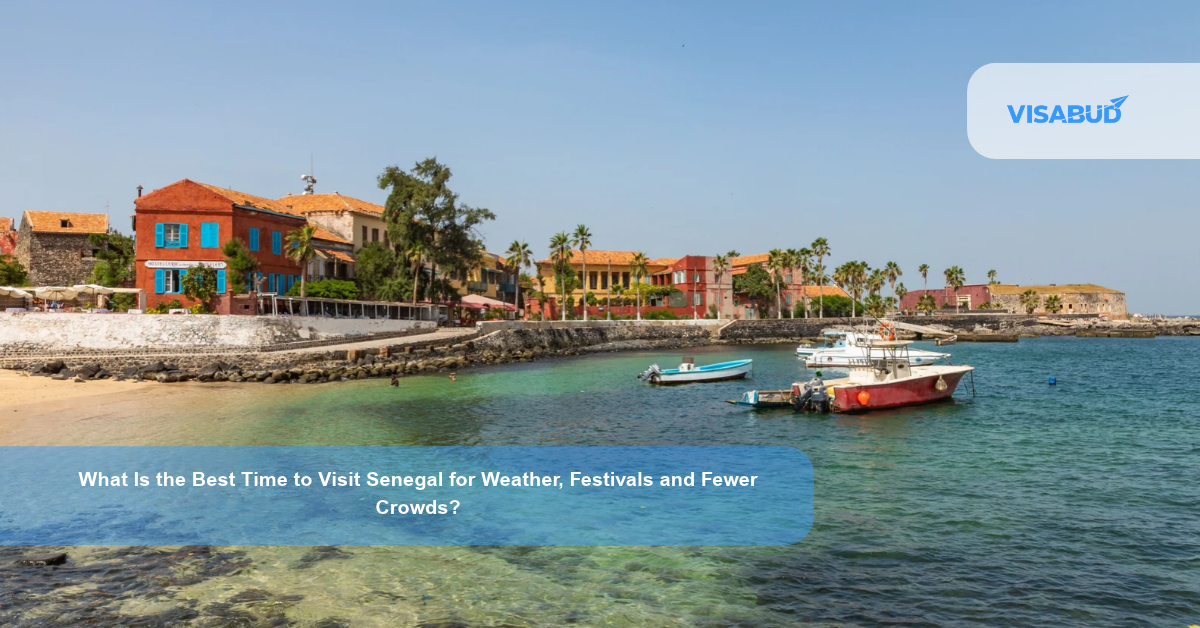
For comfort, the sweet spot is November through February. Days are sunny and dry, humidity is low, and you can walk around Gorée Island or the old quarter of Saint-Louis without feeling drained by noon.
November has an edge over the later months. The landscape still carries some green from the rains, the Harmattan haze hasn’t set in, and prices haven’t reached their midwinter peak. December to February is the postcard version of Senegal, with clear skies and reliable beach weather, but it’s also when European holidaymakers arrive in numbers.
March and April stay dry and sunny with warmer afternoons. They work well if you plan your days around the heat, with early starts and long, slow lunches. May is hot, and the coast gets noticeably muggier toward the end of the month.
Is it unwise to travel during the rainy season?
Not automatically, and it deserves more credit than it gets. If you’re comfortable with heat and humidity, the rainy season offers lower prices, empty beaches and much greener scenery.
The trade-offs are real, though. Some unpaved roads in rural areas become hard to use, certain camps and lodges in the delta and the south close or reduce service, and mosquito activity rises, so malaria precautions matter more. Check current health guidance with a travel clinic before you go, whatever the season.
If your plans center on Dakar, the coast or religious events, the rainy season is workable. If you want to cross the country by road, birdwatch or camp, the dry months are easier.
Which celebrations and occasions are worthwhile to schedule?
Senegal’s calendar mixes music, art, sport and religion. A few events are worth building a trip around.
Saint-Louis International Jazz Festival. This is the best-known music event in the country. The 34th edition was scheduled for 13 to 17 May 2026, and the festival traditionally takes place in May or June in the old colonial city on the Senegal River. Organizers describe five days of concerts, jam sessions, masterclasses, fairs and gatherings. Book rooms early, because the old island fills quickly.
Dakar Youth Olympic Games. This is a rare one. The Games will take place in Dakar, Diamniadio, and Saly from October 31 to November 13, 2026. . If you’re reading this in late 2026, expect higher hotel prices, busier roads and extra security around venues in those areas. If you want to avoid the crowds, give Dakar a miss for those two weeks, or visit the north and the south instead.
Dak’Art, the Biennale of Contemporary African Art. The 16th edition is scheduled for 19 November to 19 December 2026. Galleries, pop-up exhibitions and studio visits spread across the city, which makes late November and December an excellent time for anyone interested in art. The Biennale returns every two years.
Religious gatherings. The Grand Magal of Touba draws millions of Mouride pilgrims to the holy city. The Gamou in Tivaouane marks the birth of the Prophet. Since they both adhere to the Islamic lunar calendar, they advance by around eleven days every year. Tabaski (Eid al-Adha) and Korité, which ends Ramadan, work the same way. These are deeply meaningful events for Senegalese families. Travel is heavy around them, transport and accommodation get stretched, and some businesses close. Visitors are welcome to observe respectfully, but it isn’t the time for a rushed itinerary. Check the dates for your travel year before booking.
Ramadan. During the fasting month, daytime restaurants are quieter and some close, but evenings come alive with shared meals. Respectful visitors often find it a memorable time to be in the country, though it suits flexible travelers better than first-timers who want a packed schedule.
When are the crowds smallest?
Senegal never feels crowded in the way Morocco or Egypt can, but visitor numbers do rise and fall.
The busiest period runs from mid-December to February. European winter holidays push demand up for beach resorts in Saly and Somone and for Saint-Louis, and flights and rooms cost more.
The quietest windows are May to October. Hotels discount, restaurants are easy to book and popular spots like Lac Rose (Lake Retba) are nearly empty. The trade-off is weather. Pick May or June if you want the dry season’s tail end with thin crowds, though the heat will be at its strongest.
For a balance of good weather and lighter tourist traffic, aim for November, March or April. These shoulder months avoid the winter rush but still offer mostly dry, sunny days.
What is the best time to visit by region and interest?
Dakar and the coast. November to April is ideal. Surfers can catch swell in the northern Atlantic season, often from October through March. Gorée Island, the markets and the coastal restaurants are all easier in cooler weather.
Saint-Louis and the north. November to April is best, and May if you’re going for the jazz festival. The Djoudj National Bird Sanctuary is at its richest in the dry months, when migratory birds from Europe settle in. Pelicans and flamingos are the headline sight, and the cooler months make for comfortable boat trips.
Lac Rose and the Lompoul desert. The dry season brings clearer light, and Lac Rose looks its pinkest under strong sun. Lompoul’s dunes are best from November to March, when nights are cool enough for a comfortable camp.
Saloum Delta. The delta’s mangroves and islands are accessible for most of the year, but pirogue trips are most pleasant from November to April, with calmer weather and good wildlife viewing. Birdwatching in the rainy season can also be rewarding.
Casamance. The south is greenest from July to October, but that is also when rain and mud limit travel. Many visitors prefer December to April, when the beaches around Cap Skirring are at their best and the villages are easier to reach.
Eastern Senegal and Niokolo-Koba. The dry months are the best times to see wildlife since they congregate close to bodies of water. March and April are the most productive, but the heat is intense, so go early in the morning.
What if I can only pick one month?
Choose November. You’ll get dry, warm days, green scenery left over from the rains, open roads and a calendar that, in 2026, includes Dak’Art in the final weeks of the month. If you want live music above all, choose May. If your budget matters most, choose the shoulder weeks at either end of the dry season.
Practical tips for planning your trip
Frequently asked questions
When is the best time to travel to Senegal at the lowest cost?
The rainy season, from about June to October, offers the lowest prices on hotels and many tours. May can also be good value. Expect heat, humidity and the chance of afternoon downpours.
What is the hottest month in Senegal?
April and May are hottest in much of the country, and temperatures in the interior can exceed 40°C. Coastal Dakar stays milder because of the Atlantic breeze.
When is the best time for a beach holiday in Senegal?
December to April has the most reliable sunshine and calm conditions at beach destinations like Saly, Somone and Cap Skirring. Late autumn, in November, is quieter and slightly cheaper.
When is the best time to see birds in Senegal?
The dry season from November to April is the strongest period, especially at Djoudj National Bird Sanctuary, where migratory species gather. Cooler months make boat outings more comfortable.
Is Senegal safe to visit during big events?
Senegal is widely regarded as one of West Africa’s more stable destinations, but large events bring crowds and tighter security, so follow local guidance and check your government’s current travel advice before you go.
Is Senegal worth visiting in the rainy season?
Yes, if you want green landscapes, empty beaches and low prices, and you’re prepared for humidity, some road difficulties and mosquito precautions. It’s less suitable for camping, long road trips or wildlife safaris.
Whichever month you choose, Senegal rewards flexibility. Pick your priority first, whether that’s cool weather, a festival or a quiet beach, and the right month follows.
Contact Us to Plan Your Senegal Trip