TL;DR
Chile stretches roughly 4,300 kilometres from the driest desert on Earth to the glaciers of Patagonia, so no trip covers it all. Here is the short version:
If you can only choose one number, choose 12 days. It is long enough to feel the country’s extremes without spending the whole trip in airports.
Why Chile Is Harder to Plan Than It Looks
On a map, Chile looks like a thin ribbon. That shape fools people. It averages only about 175 kilometres wide, but it is so long that travelling end to end is like flying from Norway to Morocco. Domestic flights are common, distances are real, and every region feels like a different country.
In the north you find salt flats, geysers and skies so clear that the world’s major observatories are built here. In the centre you find vineyards, a lively capital and a Pacific coast of hillside port towns. In the south the landscape turns to volcanoes, forests and lakes, and farther down, to fjords, ice fields and wind-battered peaks. Add a remote Polynesian island in the Pacific and you have one of the most varied travel destinations anywhere.
That variety is exactly why the question “how many days?” matters. Too few days and you will rush between airports. Too many in one place and you will miss the contrast that makes Chile special. The answer depends on how many regions you want to see and how much hiking you want to do.
The Main Regions and How Long Each Deserves
Santiago and Valparaíso : 2 to 3 days
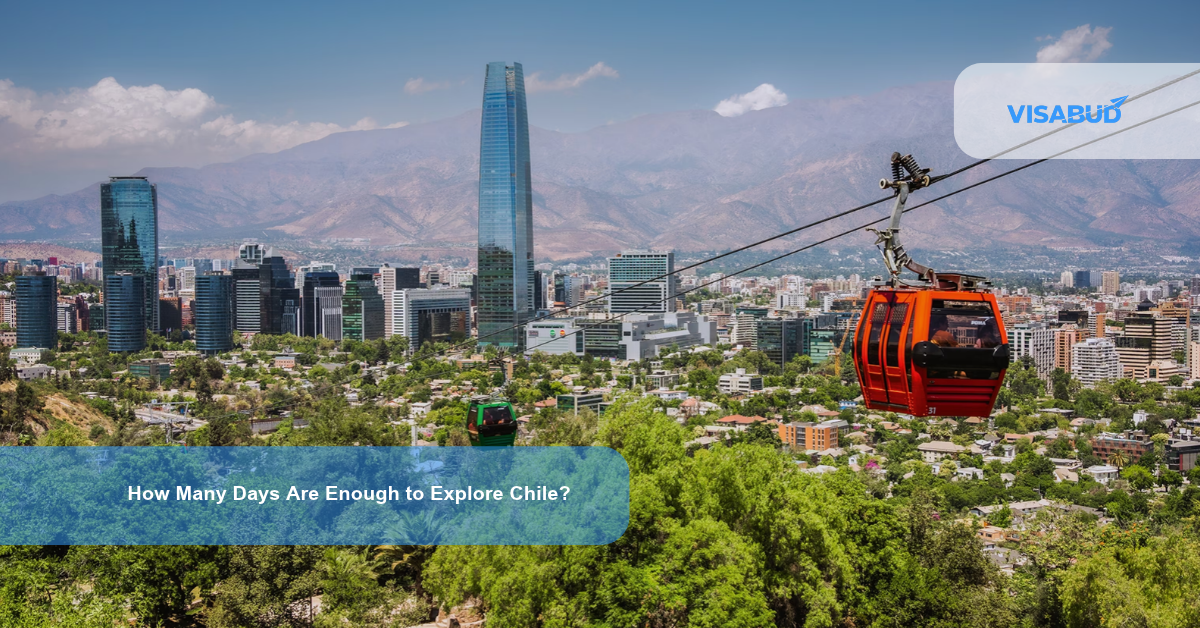
Santiago is where most international flights land, and it rewards a short stay. Ride the funicular up San Cristóbal Hill, wander the Bellavista neighbourhood, visit the museums and eat well. The Andes frame the city on clear days, which is a pleasure in itself.
Valparaíso and neighbouring Viña del Mar sit about 90 minutes away on the coast. Valparaíso is a tangle of colourful hillside houses, street art and old funiculars. It works as a day trip, but staying one night lets you see it at sunset and early morning, when it is at its best.
Central Valleys and Wine Country : 1 to 2 days
The Maipo, Colchagua and Casablanca valleys are all reachable from Santiago. Chile is famous for Carménère, Cabernet Sauvignon and increasingly good Sauvignon Blanc. A single day tour covers a couple of wineries and a lunch. If wine is a priority, give it two days and an overnight stay in a vineyard hotel.
Atacama Desert: 3 to 4 days
The Atacama is the headline attraction of the north. Base yourself in San Pedro de Atacama, a small adobe town at about 2,400 metres. Highlights include the Valle de la Luna at sunset, the El Tatio geysers at dawn, the Altiplanic lagoons and floating in a saltwater lagoon like Laguna Cejar. Stargazing tours here are among the best in the world.
Three days is the minimum. Four lets you pace yourself, which matters because the altitude can cause headaches and fatigue in the first 24 hours. Many travellers add a one-way crossing to Bolivia’s Uyuni Salt Flat, but that adds three more days.
Lake District and Chiloé: 3 to 5 days
South of Santiago, the landscape turns green. Pucón and Villarrica sit beneath an active volcano and offer hiking, hot springs, rafting and, in season, a guided climb to the crater. Farther south, Puerto Varas looks across Lake Llanquihue to the symmetrical Osorno volcano, and the island of Chiloé adds wooden churches, stilt houses and seafood stews.
This region suits people who like slower travel, so aim for at least four days. Without a car, buses link the main towns, but a rental car gives you far more freedom.
Patagonia and Torres del Paine: 4 to 6 days
This is the region many travellers dream about. Torres del Paine National Park, in the far south, offers granite towers, turquoise lakes, glaciers and guanacos grazing against mountain backdrops. The weather changes by the hour, and the wind can be fierce.
You have two main options. The “W Trek” takes four to five days and is the classic choice. For shorter visits, day hikes such as the base of the Towers, plus a boat trip to Grey Glacier, fit into three days. Remember that reaching the park means flying to Punta Arenas or Puerto Natales first, which takes a day each way once you include transfers. Four days is a workable minimum, and six is comfortable.
Easter Island (Rapa Nui): 4 to 5 days
Easter Island sits about five hours by plane from Santiago. The moai statues, volcanic craters and Polynesian culture are unlike anything on the mainland. Four days lets you see Rano Raraku, Tongariki, Orongo and a sunset at Ahu Tahai, with time left to swim. It is a worthy add-on, but it is the first thing to cut if your time is limited.
Sample Itineraries by Trip Length
5 to 7 days: A Taste of Chile
Within a week or less, pick one theme. A popular combination is Santiago (2 days), Valparaíso (1 day), wine country (1 day) and a short flight north for the Atacama (3 days). Alternatively, skip the desert and fly to Patagonia for a focused hiking trip. Do not try to do both. You will spend more time in transit than in either place.
10 to 12 days: The Sweet Spot
This is the length I recommend for first-time visitors.
You see the driest desert and the most dramatic mountains in a single trip, and you still have enough time to enjoy the capital. The flights are long, but there are only two big transfers.
14 Days : Adding the Green South
With two weeks, you can drop a day or two from each stop above and add the Lake District. A sensible plan is Santiago (2 days), Atacama (3 days), Lake District or Chiloé (4 days) and Patagonia (4 days), leaving a day for travel buffers. This gives you a rounded picture of the country’s landscapes, from desert to volcano to ice.
21 Days or More : The Full Chile
Three weeks lets you include Easter Island, a longer Patagonia trek and a proper road trip through the Lake District. You can also follow the Carretera Austral, the remote highway through northern Patagonia, which really needs a week of its own. At this length, Chile stops feeling like a checklist and starts feeling like a place you actually got to know.
When to Go Matters Almost as Much as How Long
Chile’s seasons are the reverse of the Northern Hemisphere. The best overall window is November to March, the southern summer, when Patagonia is open, days are long and the Lake District is warm. The trade-off is higher prices and busier trails in January and February.
The shoulder months of October and April bring fewer crowds, though Patagonian weather becomes less predictable. The Atacama is a year-round destination, with clear skies in most months, though nights are cold in winter. Wine harvest season in March and April is a lovely time to visit the central valleys.
If you are travelling in the Northern Hemisphere winter, you will usually be rewarded with good weather almost everywhere except the far south’s wind.
Practical Tips for Planning Your Days
Budget for transit time. Flights between Santiago and the north or the far south take two to four hours, but airport transfers and connections often consume most of a day. Count each big move as half a day lost.
Use domestic flights wisely. Overland buses in Chile are comfortable and affordable, but the distances are enormous. Flying between regions is usually worth the cost, and booking early helps, especially in peak season.
Respect altitude. If you are heading to the Atacama, avoid scheduling a demanding excursion on your first day. Drink plenty of water and take it slowly.
Book Patagonia early. Campsites and refugios in Torres del Paine require advance reservations, and popular dates fill up months ahead. Check current rules before you commit to dates.
Leave buffer days. Wind, fog or strikes can delay flights and ferries. If you have a fixed international departure, build in a spare day near the end of the trip.
Pack in layers. Even in summer, you may experience desert heat, mountain wind and coastal fog within a week.
So, How Many Days Are Enough?
There is no single perfect number, but there are useful thresholds.
Ultimately, the right length depends on your priorities. If you love hiking, give Patagonia more time and skip other regions. If you prefer food, wine and cities, stay central and add the Lake District. If you want it all, accept that you will need a second trip, which is something many people end up planning before they have even left.
Chile rewards travellers who choose depth over distance. Pick two or three regions, give each enough time to breathe, and you will leave with a far richer memory than any rushed tour of the entire map could provide.
Contact Us for More Information About Travelling to Chile.