TL;DR :
A 7-day North Macedonia trip from India costs roughly ₹75,000–₹95,000 on a budget, ₹1,10,000–₹1,50,000 mid-range, or ₹1,80,000+ for a luxury trip. Most Indians need a visa, but if you already hold a valid multiple-entry Schengen, US, UK, or Canadian visa, you can enter visa-free for up to 15 days under a 2026 facilitation rule otherwise budget ₹7,000–₹10,000 for a standard visa. Flights (no direct routes, ~15+ hours via Istanbul/Doha) run ₹45,000–₹85,000 round-trip depending on season. Hotels range from ₹700/night hostels to ₹16,000+ luxury stays, food averages ₹1,200–₹2,500/day, and local transport and sightseeing are cheap by European standards. Best value: travel April–June or September–October, and check the visa facilitation rule before applying separately.
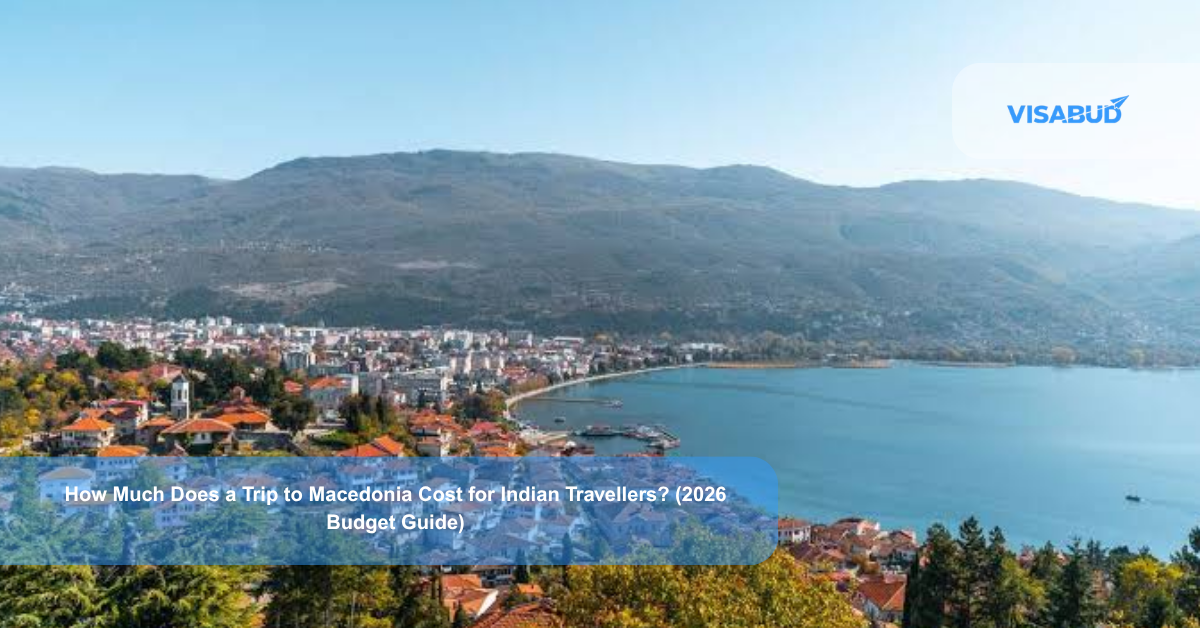
North Macedonia rarely makes it onto the average Indian traveller’s Europe shortlist and that’s exactly why it’s worth considering. This landlocked Balkan country gives you Ottoman-era bazaars, a UNESCO-listed lake, canyon boat rides, and genuinely warm hospitality, all at a fraction of what you’d pay in Switzerland, France, or Italy. If you’re wondering how much a trip to Macedonia costs for Indian travellers, this guide breaks down every rupee visa, flights, stay, food, local transport, and sightseeing based on current 2026 pricing.
Quick Answer: Total Trip Cost at a Glance
For a 7-day trip to North Macedonia from India, a budget or backpacker-style trip usually works out to around ₹75,000 to ₹95,000 in total, which comes to roughly ₹4,000 to ₹5,500 a day. A comfortable mid-range trip, staying in 3–4 star hotels and eating at a mix of local and nicer restaurants, typically lands between ₹1,10,000 and ₹1,50,000, or about ₹8,000 to ₹11,000 a day. A more indulgent, luxury-leaning trip can run ₹1,80,000 or more, working out to ₹15,000 or higher per day.
These figures include round-trip flights, visa costs, stay, food, local transport, and a reasonable sightseeing budget. Independent cost-of-living research on North Macedonia puts average daily travel costs at around $125 per day, with a typical range between $55 and $233 roughly half of what a trip to the UK or France would cost per day. Below, we break down exactly where this money goes.
1. Visa Cost and Requirements for Indian Citizens
This is the part most blogs get wrong, so let’s be precise. North Macedonia is not a visa-free destination for Indian passport holders in the way some listicles claim but there is an important exception that can save you both time and money.
As a standard rule, Indian citizens require a visa to enter North Macedonia. EU and Schengen nationals do not need a visa and can enter with just a national ID card, but this doesn’t extend to Indian passport holders. That said, there’s a useful shortcut for travellers who already hold a valid multiple-entry Schengen, US, UK, or Canadian visa: North Macedonia currently allows facilitated entry without a separate Macedonian visa for these travellers. Eligible travellers with a valid multiple-entry British, American, or Canadian visa may stay in North Macedonia for up to 15 days, provided that visa remains valid for at least five days beyond the planned stay. This rule has been extended for 2026, but since it’s a temporary facilitation measure, always reconfirm it on the Macedonian Ministry of Foreign Affairs site before booking, as such waivers can be revised.
This is a big deal for Indian travellers doing a wider Balkans or Europe itinerary if you’re already holding a Schengen visa for Greece, Italy, or Croatia, you can often add Skopje, Lake Ohrid, and Matka Canyon to your trip without extra visa paperwork or fees.
If you don’t hold one of these visas, you’ll need to apply for a standard short-stay (Type C) tourist visa through the nearest Macedonian embassy or an authorised visa centre. You’ll typically need your original passport valid for at least six months beyond your travel dates with blank pages, confirmed round-trip flight tickets, proof of accommodation such as a hotel booking or invitation letter, bank statements showing sufficient funds, and travel insurance covering the Schengen or Balkan region.
Short-stay European-style visa fees for similar Balkan countries typically fall in the €60–€80 range, or roughly ₹5,500 to ₹7,500, plus any service charges if you apply through a visa agency. Since India doesn’t have a resident Macedonian embassy, most applicants route through a regional embassy or an authorised visa facilitation service, which adds a service fee budget an extra ₹1,500 to ₹3,000 for this. So if you already have a valid multi-entry Schengen, US, UK, or Canada visa, you can factor in ₹0 extra for a Macedonian visa. If you don’t, budget roughly ₹7,000 to ₹10,000 for visa processing.
2. Flight Costs from India to North Macedonia
There are no direct flights from India to North Macedonia; the fastest flight from India to North Macedonia takes around 15 hours 25 minutes with at least one stopover, usually via Istanbul, Doha, Vienna, or a Central European hub. Lufthansa and Turkish Airlines are among the most commonly used carriers on this route.
Based on current fare data across major booking platforms, the cheapest round-trip fares run around ₹45,000 to ₹55,000 if you book off-season and well in advance and are willing to take one or two stops. Average round-trip fares from Delhi or Mumbai during a standard booking window tend to fall between ₹65,000 and ₹85,000. During peak season or if you book last minute, fares can climb to ₹90,000 to ₹1,20,000 or more. Turkish Airlines flights from New Delhi have been available from around ₹77,275, while flights from Mumbai via IndiGo, Austrian, or Qatar Airways have started around ₹93,712 depending on the season. Booking two to three months in advance and flying via Istanbul or Doha usually gets you the best combination of price and journey time.
As a money-saving tip, Skopje (SKP) is the main international gateway, but budget carriers like Wizz Air and Ryanair connect it cheaply to other European cities. If you’re already touring Europe, a short intra-Europe flight or even a bus or train from Sofia, Thessaloniki, or Belgrade can be far cheaper than a direct India–Skopje ticket.
3. Accommodation Costs in North Macedonia
Accommodation is where North Macedonia really shows its value compared to Western Europe. The average price of a double room in the country is around $85 per night, with budget deals as low as $36 per night. A 4-star hotel typically runs about $98 a night, and a 5-star property around $132 a night.
In rupee terms, a hostel dorm bed usually costs somewhere between ₹700 and ₹1,500 a night, which suits solo or backpacker travellers well. A budget hotel or guesthouse generally runs ₹2,500 to ₹4,500 a night, a comfortable option for couples and budget-conscious travellers. Stepping up to a 3–4 star hotel puts you in the ₹6,000 to ₹9,000 a night range, offering solid mid-range comfort, while a 5-star or luxury property will typically cost ₹11,000 to ₹16,000 or more per night.
Hotels are generally cheapest in February, averaging around $65 a night, while May sees the highest average rates at about $109 a night, so shoulder-season travel in spring or early autumn, outside peak summer — can meaningfully cut your stay costs. Skopje and Ohrid have the widest range of options; smaller towns like Bitola or Kumanovo tend to be even cheaper.
4. Food and Dining Costs
Macedonian food is a mix of Balkan, Mediterranean, and Ottoman influences think grilled meats, ajvar, burek, and fresh salads and it’s genuinely affordable by European standards.
Street food and bakery snacks like burek or banitsa usually cost between ₹100 and ₹250, while a full meal at a budget local restaurant runs ₹350 to ₹600. A mid-range restaurant meal with a drink typically costs ₹800 to ₹1,500, and fine dining can run ₹2,000 to ₹3,500. A local beer or glass of wine usually costs ₹150 to ₹350. Put together, a realistic daily food budget mixing local eateries with one nicer meal comes to about ₹1,200 to ₹2,500 per person.
Vegetarian Indian travellers will find it relatively easy to eat well here grilled vegetables, salads, cheese-based dishes like the local shopska salata and tavče gravče bean stew, and bread are widely available, though it’s worth learning a few Macedonian phrases or using a translation app, as English menus aren’t guaranteed outside major tourist areas.
5. Local Transport Costs
Getting around North Macedonia is cheap and straightforward. A city bus ticket in Skopje generally costs ₹40 to ₹80, while an intercity bus from Skopje to Ohrid, a roughly three-hour journey, costs around ₹350 to ₹600. Taxis within Skopje are reasonably priced too, usually ₹150 to ₹400 for most short rides. If you’d rather drive yourself, car rental runs about ₹2,500 to ₹4,500 a day. An airport transfer from Skopje airport to the city centre costs roughly ₹700 to ₹1,200 by taxi, or under ₹150 if you take the shuttle bus instead.
If your itinerary covers both Skopje and Lake Ohrid, the two most-visited spots, renting a car for a few days or booking a private transfer is often more convenient than juggling bus schedules, especially if you’re also planning to visit Matka Canyon or Bitola.
6. Sightseeing and Activities
Most of North Macedonia’s biggest draws are either free or very low-cost. Wandering through the Skopje Old Bazaar and across the Stone Bridge costs nothing at all. A boat ride through Matka Canyon to Vrelo Cave costs around ₹250 to ₹400. Walking through Ohrid’s Old Town and visiting the Church of St. John at Kaneo is largely free, though specific churches and museums may charge small entry fees of ₹50 to ₹150. Entry to Samuel’s Fortress in Ohrid runs about ₹100 to ₹150, and a ride up the Millennium Cross cable car in Skopje costs roughly ₹300 to ₹500. Guided day tours covering Ohrid, the wine regions, or Mavrovo National Park typically cost ₹1,500 to ₹3,500 per person.
Altogether, it’s reasonable to budget around ₹3,000 to ₹6,000 total for sightseeing across a week-long trip, more if you add wine-tasting tours or multi-day excursions to Mavrovo or Pelister National Parks.
7. Currency and Money Matters
The Macedonian Denar (MKD) is the native currency. At current exchange rates, 1 MKD is worth roughly ₹1.7, though this fluctuates, so check a live converter before you travel. Euros are also widely accepted in tourist areas, hotels, and some shops, which is convenient if you’re arriving from elsewhere in Europe with euros already in hand.
A few practical money tips are worth keeping in mind. Carry a mix of cash, in Denars or Euros, along with a forex or travel card, since smaller towns and local eateries may not accept international cards. ATMs are common in Skopje and Ohrid but scarcer in rural areas. It’s also worth informing your Indian bank about your international travel to avoid your card being blocked mid-trip. Finally, North Macedonia requires travellers entering or exiting the country to declare cash amounts equivalent to €10,000 or more.
8. Sample 7-Day Budget Breakdown
Here’s a realistic mid-range budget for one person on a 7-day trip covering Skopje, Ohrid, and Matka Canyon. Round-trip flights come to around ₹70,000, and a visa, if required, adds roughly ₹8,000. Seven nights in a 3-star hotel would cost about ₹49,000, while food for the week comes to around ₹12,000. Local transport typically runs ₹5,000, sightseeing and activities another ₹5,000, and travel insurance about ₹2,500. Adding a miscellaneous or shopping buffer of around ₹5,000 brings the total to approximately ₹1,56,500 per person.
Couples travelling together can bring this down meaningfully by sharing accommodation, and solo backpackers using hostels and local buses can realistically do the same trip for ₹75,000 to ₹90,000, excluding a possible visa fee.
9. Best Time to Visit for the Best Prices
February and March bring the cheapest hotel rates and cold weather, making this stretch ideal for budget travellers who don’t mind cooler temperatures. April through June, and again September through October, offer the best balance of pleasant weather and moderate prices, making this the sweet spot for most Indian travellers. July and August are peak summer seasons around Lake Ohrid, bringing higher hotel and flight prices along with larger crowds. November through January is the off-season, with the lowest flight fares, though many lakeside attractions and boat rides operate on reduced schedules during these months.
10. Money-Saving Tips for Indian Travellers
Booking flights via Istanbul or Doha two to three months ahead usually gets you the best fares on Turkish Airlines or Qatar Airways. It’s also worth combining this trip with a wider Balkans itinerary, since Albania, Kosovo, and Bosnia are all nearby and can share the same Schengen or facilitated-entry visa strategy. Travelling in the shoulder season, around April–May or September, gets you lower hotel rates without peak-summer crowds. Eating where locals eat bakeries and small family-run restaurants costs a fraction of hotel restaurant prices. Using intercity buses instead of private transfers between Skopje and Ohrid cuts transport costs significantly. And before applying for a separate Macedonian visa, it’s worth checking whether the Schengen, US, UK, or Canada visa facilitation rule applies to you, since it could save you both money and paperwork.
Frequently Asked Questions
Do Indians need a visa for North Macedonia?
Yes, in most cases. Indian passport holders generally require a Macedonian visa, though travellers holding a valid multiple-entry Schengen, US, UK, or Canadian visa can currently enter visa-free for up to 15 days under a temporary facilitation rule. Always verify current rules on the official Ministry of Foreign Affairs website before travelling.
What is the cheapest way to reach North Macedonia from India?
There are no direct flights, so the cheapest route is usually a one-stop connection via Istanbul, Doha, or a European hub on Turkish Airlines, Qatar Airways, or Lufthansa, booked two to three months in advance.
Is North Macedonia expensive for Indian tourists?
No, it’s one of the more affordable European destinations, with average daily costs significantly lower than Western Europe. A comfortable mid-range trip can be done for around ₹8,000 to ₹11,000 per day, including stay, food, and local transport.
How many days are enough for a Macedonia trip?
Five to seven days is ideal to cover Skopje, Lake Ohrid, Matka Canyon, and Bitola without rushing.
What currency should I carry Euros or Macedonian Denar?
Both work in tourist areas, but Denars get better value for local transport, markets, and smaller eateries. Euros are convenient if you’re arriving from elsewhere in the Schengen zone.
Planning your Macedonia trip? Contact Us for guidance to make your travel planning easier.