TL;DR:
The best time to visit Kiribati is the dry season, roughly May to October, when trade winds ease the heat and seas are calmer. Temperatures stay around 30 to 31°C all year, so rain, wind and flights matter more than the month.
Kiribati is generally best explored during its drier months, from around May through October. Trade winds moderate the heat and support better diving and boat conditions than the wetter months. Temperatures barely change through the year, so rainfall, wind and flight schedules matter more than the thermometer.
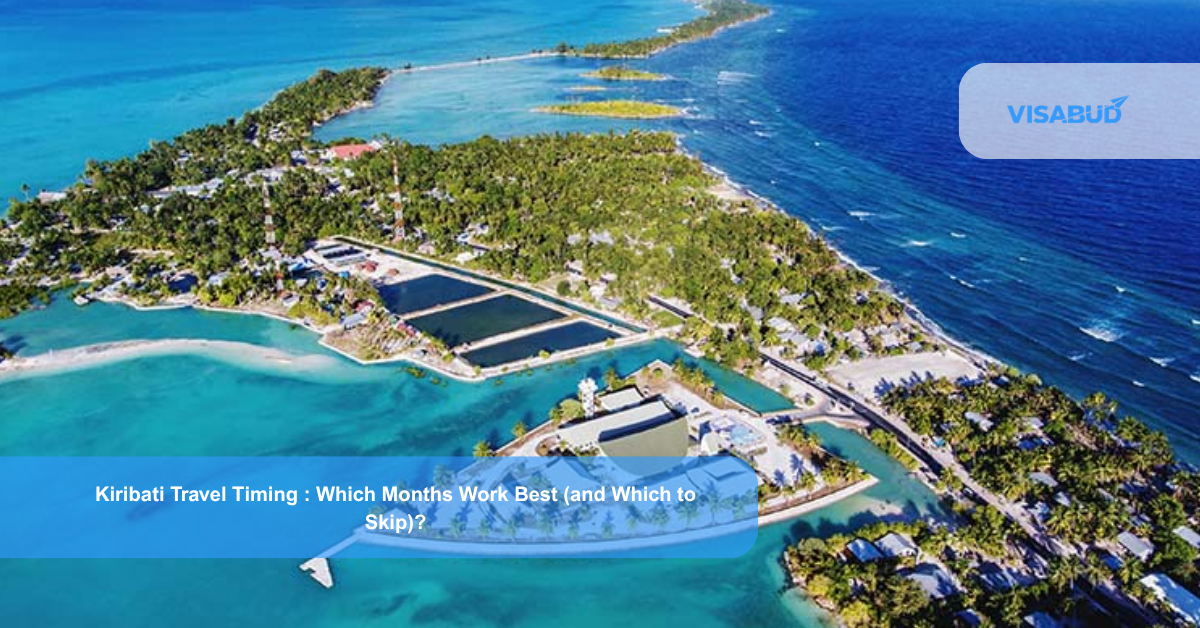
Kiribati sits on the equator in the middle of the Pacific, spread across about 33 coral atolls. Only a few thousand visitors arrive each year, so timing works differently here than in most places. You won’t be fighting crowds, but you will be dealing with a small number of flights and a limited supply of beds.
How the weather works in Kiribati
There’s no summer or winter. Mean daily highs in Tarawa stay between roughly 30.6°C and 31.3°C in every month. Nights rarely drop below 24°C. If you’re hoping for a cooler month, you won’t find one.
What changes is rain. Tarawa gets around 2,000 mm a year, with March the wettest month at about 240 mm and October the driest at about 102 mm. Where you go matters too. Rainfall runs from about 3,000 mm in the northern island of Butaritari down to 1,110 mm at Tamana in the south. Kiritimati (Christmas Island) is drier again, at around 1,000 mm a year.
Dry season vs. wet season
Dry season (about May to October). The southeast trade winds bring relief from the equatorial heat, while the lagoons remain beautifully clear. Walking around Tarawa’s villages and war sites at midday is more comfortable because humidity drops enough for extended walking. The downside is that this is the busiest time for the islands’ small selection of lodges and guesthouses, so book early.
Wet season (about November to April). Expect more rain and more humidity. Rain often arrives in short, intense bursts rather than long downpours, so you’ll still see sun. Unpaved roads can become muddy during rain, while bad weather may also increase the chances of flight delays.On the plus side, November to February brings the fewest crowds.
One caution: published sources don’t agree on exactly when the seasons begin and end. Some put the wet season from December to April, others from November to April. That’s normal where the pattern shifts from year to year, so treat the months above as a guide, not a promise.
El Niño and La Niña can override the calendar
This is often overlooked in many guides, but it can be more important than the month you decide to travel. Kiribati’s climate varies a lot from year to year because of the El Niño-Southern Oscillation, and El Niño tends to bring wetter, warmer conditions. The swing is large. In its wettest years Tarawa has received more than 4,000 mm of rain, and in the driest years as little as 150 mm.
La Niña tends to go the other way. The Kiribati Meteorological Service says it is usually linked with suppressed rainfall. That sounds ideal for a visitor, but on flat atolls with no rivers it can mean trouble. Kiribati has periodic spells of drought, which can be severe, and water restrictions may follow.
So a “dry season” trip in an El Niño year can be wetter than a “wet season” trip in a La Niña year. Before you book, look at the current ENSO outlook and the Kiribati Meteorological Service’s climate bulletins.
Cyclones, wind and swell
Kiribati is close enough to the equator that it does not usually experience tropical cyclones, though the wet months can bring strong winds and sea swells. Some government advisories are more cautious. Singapore’s foreign ministry notes that cyclones can occur between November and April and disrupt travel.
The risk is low, not zero. If you travel in the wet season, keep your dates flexible and follow local weather updates.
Choose the best time to visit based on the activities you plan to enjoy.
Tarawa’s history and everyday life. June to September is the most comfortable stretch for Tarawa’s historical sites and village areas. Try to be there around July 12. Independence Day grows into a week-long festival with canoe races, traditional dance and sports, centred on South Tarawa. It’s a good chance to see local culture, but with so few beds, reserve well ahead.
Diving and snorkelling. Stick to the dry season. Sea conditions then support diving visibility and inter-island boat travel more reliably.
Fishing on Kiritimati. This island is famous for bonefish, and timing is forgiving. Because it’s so close to the equator, the weather doesn’t change much from season to season, so there’s no small window you have to hit. Moon and tides matter more than the month, though guides disagree on how. One guide says bonefish anglers should aim for quarter-moon neap tides, while giant trevally fishing is better around full and new moons. A lodge blog says local guides favour the three days either side of the full moon for bonefish, when the fish school up. Ask your lodge what their guides prefer.
Wind is worth a look too. The same lodge blog says January tends to be the windiest month and July the wettest, with winds easing from March and picking up again around November. That’s one source, and it’s from 2018, so treat it as a rough trend. It also notes that most US anglers come in the winter months, so late spring and summer can be quieter on the flats.
New Year’s Eve. Kiritimati runs on UTC+14, so it’s among the first places on Earth to welcome the new year. One travel adviser recommends booking at least a year ahead for this window.
Peace and quiet. If avoiding other travellers matters most, November to February is the emptiest period. You’ll trade that for the heaviest rain and the most humidity.
Timing your flights
Flights, not weather, often decide when you can go. Fiji Airways flies to Bonriki International Airport in Tarawa and to Cassidy International Airport in Kiritimati. Nauru Airlines connects Tarawa with Brisbane, Nadi and Majuro, among others, and also runs the Tarawa to Kiritimati service on behalf of Air Kiribati. That last route is thin. As of January 2026 it operated once a week and took about four and a half hours.
Weekly service means Kiritimati trips usually run about a week. One fly-fishing report describes about six and a half days of fishing on a typical trip because flights land only once a week. Airline timetables change, and Nauru Airlines says its published schedules are a guide only. Confirm flights before you pay for lodging.
Entry, health and packing
You’ll need a passport valid for at least six months after your departure date and an onward or return ticket. Kiribati’s tourism site lists India among the countries whose citizens don’t need a visa, with a maximum stay of 90 days in any 12-month period. Rules can change, so confirm with the Kiribati Ministry of Foreign Affairs and Immigration before you travel.
On health, dengue occurs in Kiribati, so use repellent, cover up and choose lodging with window screens. Boil or buy bottled drinking water, and avoid local shellfish and lagoon fish on Tarawa. Medical facilities are limited and evacuation can be expensive, so buy comprehensive travel insurance.
Pack light, breathable clothes, sunscreen and repellent. Dress modestly outside tourist areas and ask before photographing people.
Frequently asked questions
When is the rainy season in Kiribati?
Roughly November to April, though sources vary by a month at either end. El Niño years can make it wetter still.
Is Kiribati hot all year?
Yes. Daytime highs stay around 30 to 31°C every month, with high humidity.
Does Kiribati get cyclones?
Rarely, because it lies so close to the equator. Strong winds and swells are more common in the wet season.
When is the best time to fish on Christmas Island?
Fishing works all year. Plan around moon phase, tides and wind rather than the month, and expect fewer other anglers in late spring and summer.
How long should I stay?
For Kiritimati, plan on about a week because of the weekly flight. Tarawa needs a few days at least, and more if you want to reach the outer islands.
Planning a Kiribati Trip? Contact Us for Travel Guidance