TL;DR :
Best time to visit Guadeloupe for good weather: December to April, with February–April being the driest and most consistent stretch (24–28°C, low rainfall). This is also peak season, so expect higher prices and bigger crowds, especially around Christmas, February, and Easter.
Want lower prices and fewer crowds and can tolerate a passing shower? Go in May, June, or November shoulder months with lower hurricane risk than the deep wet season.
Avoid if possible : August–October, the peak of hurricane season. Rain is heavier and more frequent, and storm risk is real, even though most days are still storm-free. Go if you want rock-bottom prices, but buy travel insurance and watch the forecast.
Quick notes :
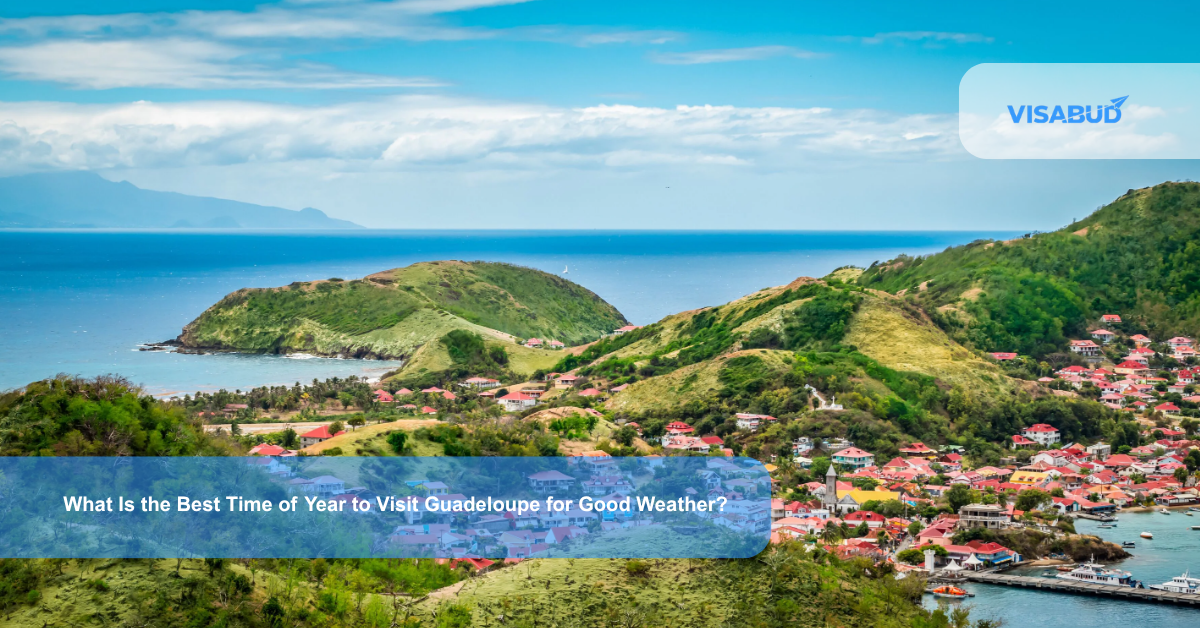
Guadeloupe sits in the eastern Caribbean, split into two main “wings” joined by a narrow strait, and it has a warm, humid, tropical climate all year round. That basic fact never changes. What does change, season to season, is how much rain falls, how hot the air feels, how crowded the beaches get, and how much you’ll pay for a room. So the honest answer to “when should I go” isn’t a single month. It’s a trade-off between dry, sunny, expensive months and wetter, cheaper, quieter ones with a hurricane-risk window you’ll want to understand before you book.
This guide breaks that trade-off down properly: the two core seasons, the month-by-month shifts inside them, what each season means for specific activities like diving or hiking, and the misconceptions that trip up a lot of first-time visitors.
Quick Answer
The most reliable stretch of good, dry weather in Guadeloupe runs from December through April, with February to April usually offering the lowest rainfall and the most consistent sunshine. Air and sea temperatures during this window typically sit between 24°C and 28°C, which is comfortable rather than oppressive.
If your priority is avoiding rain and storms, aim for this window. If your priority is avoiding crowds and high prices, and you don’t mind occasional short showers, the shoulder months of May, June, and November tend to give you a workable middle ground. If you’re flexible on price but not on weather, steer clear of August through October, which is when hurricane risk is at its highest.
Guadeloupe’s Climate, in Plain Terms
Guadeloupe doesn’t really have four seasons in the way a temperate country does. It has two: a dry season and a wet season, and the year swings between them.
The dry season, known locally as carême, runs roughly from December to April. Rainfall is lower, humidity eases off a little, and the trade winds keep the heat from feeling heavy. This is when the island looks and feels most like the postcard version of the Caribbean.
The wet season, known as hivernage, runs from May through November. It doesn’t mean constant rain; most days still include plenty of sunshine but showers are more frequent, more sudden, and the air holds more moisture. This is also the window that overlaps with the Atlantic hurricane season.
A useful way to think about it: dry season weather is predictable and pleasant but comes at a premium; wet season weather is more variable but rewards you with lower prices, quieter beaches, and lusher landscapes, since the rain is what keeps Guadeloupe’s rainforest interior so green.
The Dry Season (December–April) : Why It’s the Default Recommendation
During carême, daytime temperatures generally sit in a comfortable range, and rain when it falls tends to be brief rather than day-long. This is the period most guides point to as the safest bet for a beach-and-sunshine trip, and it’s also Guadeloupe’s peak season, considered the best months for snorkelling, surfing, hiking La Grande Soufrière, and whale watching.
A few things worth knowing about this window :
It is also the busiest and most expensive time of year to visit. The dry season overlaps heavily with French school holidays, since Guadeloupe is a French overseas region. That means Christmas, New Year, February, and Easter are the periods when prices climb the most, and accommodation can book out well in advance. If you’re chasing good weather but want to dodge peak pricing, the early and later edges of this window say, mid-January or April tend to be a bit calmer than the school-holiday peaks.
Not every dry-season month is equally dry. Rainfall generally trends downward as the season progresses, with February through April often producing the least rain of the year. December and January, while still part of the dry season, can carry a bit more residual moisture from the tail end of hurricane season.
The volcano and rainforest interior behave differently from the coast. Basse-Terre, the western, more mountainous half of Guadeloupe, holds onto cloud cover and rain more than the flatter, drier Grande-Terre to the east. If your trip depends on hiking La Soufrière or visiting waterfalls like the Carbet Falls, dry season conditions matter more for visibility and trail safety than they do for a beach day on Grande-Terre, which stays comparatively dry even in wetter months.
The Wet Season (May–November): Not as Bad as It Sounds
It’s tempting to write off six or seven months of the year as “the bad season,” but that’s an oversimplification. Wet season in Guadeloupe generally means brief, heavy downpours often in the afternoon followed by clear skies, rather than sustained all-day rain. Many mornings during this stretch are sunny, and sunshine hours remain fairly generous even in the wetter months.
This season breaks down into a few distinct phases worth separating out :
May and June act as a shoulder period. The heaviest rain hasn’t arrived yet, hurricane risk is still low, and prices start to soften as the dry-season crowds thin out. This is a genuinely underrated window if your main goal is good value rather than guaranteed dry days.
July through October is when the wet season is at its most active, and this overlaps with the core of the Atlantic hurricane season. Humidity climbs, showers become more frequent and sometimes heavier, and there’s a real, non-trivial chance of a tropical storm or hurricane passing near or over the islands, with the greatest regional risk typically concentrated around August to October. September in particular is often singled out as the month to approach with the most caution, since it tends to combine high humidity with the height of hurricane season, even though the heat itself stays pleasant.
November starts to transition back toward the dry season, with rainfall tapering and hurricane risk dropping off, though the weather can still be somewhat unpredictable compared to the December–April stretch.
Understanding Hurricane Season Properly
A lot of travelers hear “hurricane season” and assume it means the trip is off. That’s an overreaction in most years, but it’s worth understanding the actual risk rather than guessing.
The Atlantic hurricane season officially spans June through November, and Guadeloupe’s own tourism materials typically flag the peak risk window as August through the end of September. During this stretch, a hurricane or tropical storm passing close to or over the islands is a real possibility, not a remote one. A travel writer’s family experienced this firsthand when a relative’s September trip coincided with a tropical storm, describing it simply as bad luck rather than a rare fluke.
That said, most days even within hurricane season are storm-free. The risk is better understood as a probability that rises through the season and peaks around August to October, rather than a guarantee that something will happen on any given trip. If you do decide to travel during this window and many people do, specifically because of the lower prices and quieter beaches a sensible approach is to buy travel insurance that covers weather-related cancellations, keep an eye on tropical storm forecasts in the week or two before departure, and stay flexible on your exact dates if you’re booking far in advance.
Best Time to Visit by Activity
Weather quality depends on what you actually plan to do once you’re there. A few activity-specific notes :
Diving and snorkeling. Visibility tends to be best in calmer, drier conditions, which generally puts the dry season ahead, though the Cousteau Reserve and other dive sites remain workable through much of the year. Some divers actually prefer the quieter wet-season months for fewer boats on the reef, provided conditions stay calm.
Hiking La Soufrière and the rainforest. Trail conditions and visibility on the volcano are noticeably better in the dry season. Wet-season hikes are still possible but come with muddier trails, more cloud cover at altitude, and a higher chance of getting rained on mid-hike.
Whale and dolphin watching. This activity is generally tied to the dry season months, when calmer seas make sightings more consistent.
Surfing. Wave conditions on Guadeloupe’s Atlantic-facing coasts can pick up in the winter months, which lines up conveniently with the dry season for travelers who want both surf and sunshine.
Carnival and cultural events. Guadeloupe’s Carnival celebrations run through the dry season and peak around February, layering a strong cultural draw on top of the best weather window of the year.
Sailing. For anyone chartering a boat, the dry season from December to April is generally considered the most favorable stretch for sailing conditions in Guadeloupe.
Common Misconceptions Worth Clearing Up
“Wet season means it rains all day, every day.” In practice, wet season showers are usually short and intense, followed by sun. Total daily sunshine hours don’t drop as dramatically as people expect even the quieter, low season months still average around 8 hours of sunshine a day.
“Dry season is always calm and safe.” The dry season is called that because rainfall is lower, not because the weather is uniformly gentle. Trade winds can still be strong, and seas can be choppier at certain points in this window than people assume.
“Hurricane season means to avoid Guadeloupe entirely from June to November.” The elevated risk is concentrated in a narrower window roughly August through early October rather than spread evenly across the full six-month hurricane season. Early wet-season months like May and June, and late-season November, carry meaningfully lower storm risk.
“The whole island has the same weather.” Basse-Terre and Grande-Terre are genuinely different microclimates. Basse-Terre’s mountainous, forested terrain draws more rain and cloud cover year-round, while Grande-Terre’s flatter landscape stays drier even during the wet season. A rainy afternoon on one side of the island doesn’t necessarily mean a rainy afternoon on the other.
Questions People Ask Next
Is it worth visiting Guadeloupe in the off-season for lower prices?
Yes, for many travelers it is particularly May, June, and November, which sit outside the highest-risk hurricane window while still offering noticeably lower accommodation costs and thinner crowds than the December–April peak.
Does rain in Guadeloupe usually ruin a beach day?
Rarely for a full day. Showers tend to pass through quickly, and many visitors experience sun again within an hour or two of a downpour. It’s more disruptive for activities with fixed timing, like a scheduled snorkeling excursion, than for a general beach day where you can simply wait it out.
What month has the best balance of good weather and fewer crowds?
April and late November tend to be mentioned most often as sweet spots. April sits at the tail end of the reliable dry season with slightly thinner crowds than February, while late November picks up the early benefits of the dry season returning without the full peak-season pricing.
Do I need to avoid Guadeloupe entirely during hurricane season?
No, but it does require more planning. Travel insurance, flexible dates, and monitoring forecasts in the immediate run-up to your trip are reasonable precautions rather than reasons to cancel outright.
Is the water warm enough to swim year-round?
Yes. Sea temperatures in Guadeloupe stay warm throughout the year, generally sitting in a comfortable range for swimming regardless of season, so water temperature isn’t really a deciding factor when choosing when to visit.
Bringing It Together
If good weather is your top priority and you’re not especially price-sensitive, December through April and February to April specifically is the safest, most consistent choice. If you’re comfortable trading some weather certainty for lower costs and quieter beaches, May, June, and November offer a reasonable middle path. And if you’re set on visiting during peak hurricane risk, from August into early October, go in with eyes open: buy insurance, stay flexible, and check the forecast close to departure rather than months in advance.
There’s no single “correct” month for everyone. The right time to visit Guadeloupe depends on how much you value sunshine certainty over savings, and which side of the island the drier beaches of Grande-Terre or the lush, wetter interior of Basse-Terre you’re planning to spend most of your time on.
Contact Us for Travel Advice